This article was part of FORUM+ vol. 33 no. 1, pp. 42-53
The sexual body as a battleground of national identity. Independent cinema and film censorship in Vietnam
Việt Vũ
This study examines how Vietnam’s independent cinema employs the sexual body to challenge state morality and recode national identity, while tracing the evolution of censorship from the colonial era to the contemporary market-oriented period (2010–2024).
Deze studie onderzoekt hoe de onafhankelijke cinema in Vietnam het seksuele lichaam gebruikt om de staatsmoraal uit te dagen en de nationale identiteit te hercoderen, waarbij de evolutie van censuur wordt gevolgd vanaf het koloniale tijdperk tot de hedendaagse marktgerichte periode (2010–2024).
Introduction
Having worked as a film critic and independent filmmaker in Vietnam, and having witnessed for over fifteen years how independent films repeatedly drew headlines for their encounters with censorship, I embarked on my ongoing PhD research into film censorship in Vietnam. In part, this motivation stems from my personal experience with censorship – when my short film The Eternal Springtime was banned in Vietnam in 2018 on the grounds of “violating traditional moral values” – which compelled me to confront, and ultimately transcend, my fear of censorship. When I first learned that my film had been banned by the National Council for Film Appraisal and Classification, I knew little about what censorship entailed or how it functioned, as there was very limited English-language research on film censorship in Vietnam. Inside the country, there has been no formal education on the subject.
During my PhD research, my position as an insider filmmaker significantly shaped both the gathering and interpretation of data. During two field trips in 2023 and 2024 I moved fluidly between multiple roles – researcher, participant, colleague, emerging filmmaker, translator, and workshop attendee – often within the same event and among the very community of which I am a member. This mode of practising auto-ethnography influenced what people chose to share with me, particularly regarding sensitive issues such as censorship, and it shaped how I made sense of those accounts. Everyday professional interactions – whether at official screenings or during informal after-parties, pavement drinks, or rooftop gatherings – thus became simultaneously moments of collegial exchange and moments of research. This fluid positionality not only granted me privileged access to otherwise hidden knowledge but also informed the narrative voice of this article, as my sense of belonging within this close-knit filmmaking community inevitably coloured my understanding and representation of our shared experiences.
Drawing on document analysis, close readings of Vietnamese independent films, and qualitative interviews, this article examines how filmmakers negotiate censorship and, through that process, reshape notions of national identity. I argue that through a negotiation between personal expression and state control, Vietnamese independent filmmakers are not only resisting censorship but also reimagining the nation’s cultural identity from within. The discussion bridges creative practice and critical theory, thereby expanding existing scholarship on film censorship and independent cinema in Southeast Asia.
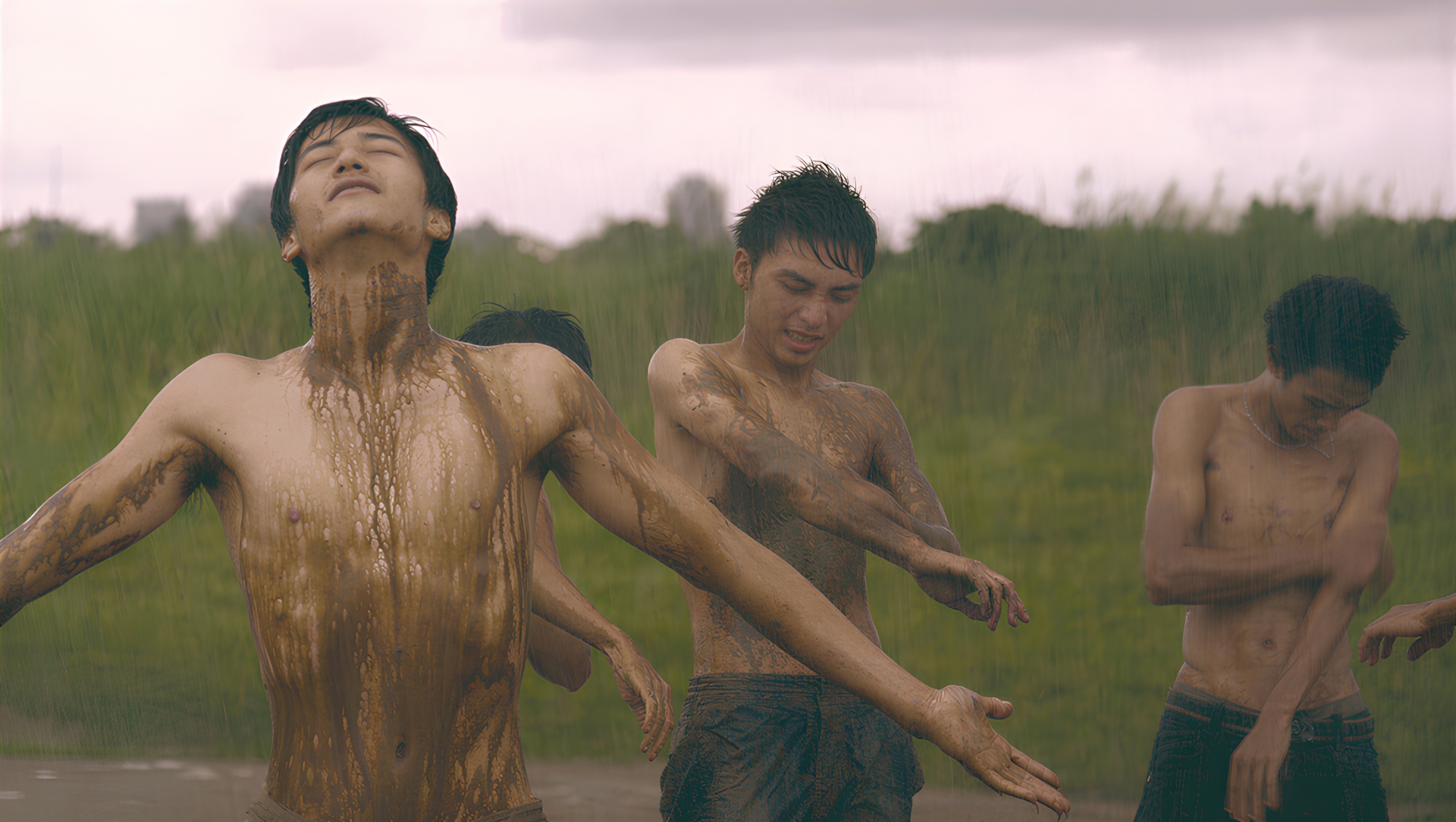
Screenshot from the movie Bi, Don’t Be Afraid!, a cornerstone of Vietnamese independent cinema, 2010. Courtesy: Director Phan Đăng Di.
The article first reviews existing scholarship on film censorship to situate the Vietnamese case within comparative Asian and global frameworks. It then outlines the socio-historical background of Vietnamese film censorship and the development of independent cinema in the contemporary neo-liberal single-party state since the early 2000s. This is followed by an examination of the traditional use of the human body in representing Vietnamese identity and an analysis of censorship negotiations surrounding four Vietnamese independent films produced between 2010 and 2024, demonstrating how Vietnamese independent cinema is reshaping notions of national identity.
Literature review
Scholarship on film censorship has predominantly focused on large film industries in the West, such as those in the United States and Britain. While no study explicitly ranks global research productivity in film censorship, comparative reports on film ratings and classification systems note that many European and North American countries are among the most thoroughly documented cases, largely due to their established regulatory systems and readily available archival and legal records, especially when contrasted with regions such as Africa where data remains scarce.1 Whereas the remarkably extensive body of scholarly and historical writing on film censorship in North America and European countries spans multiple disciplines and many archival documents, authors frequently focus on two central areas: legal analyses and cultural interpretations.2
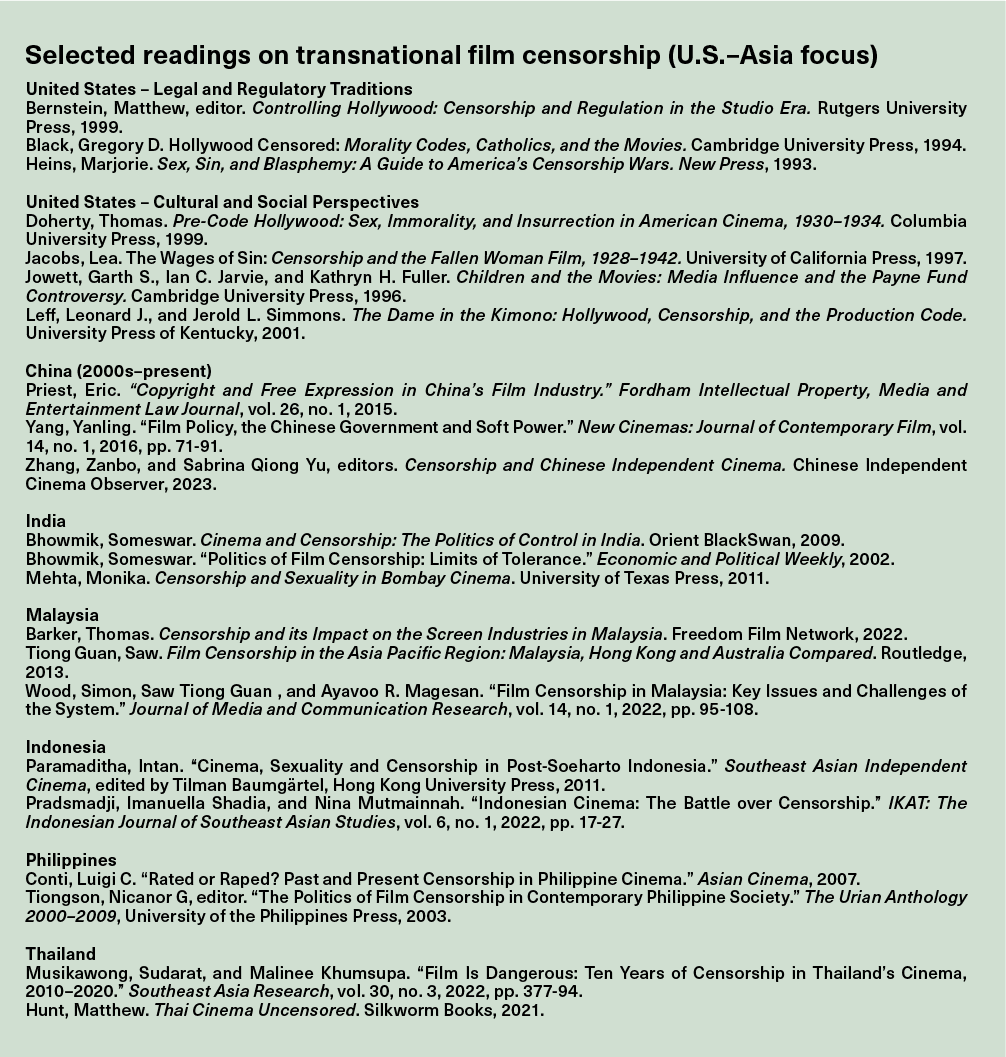
In the digital age, Asian film markets have attracted growing scholarly attention on film censorship. While leading scholars of Chinese cinema have demonstrated that film censorship operates under a logic of political-ideological control characteristic of the single-party socialist state, research on India in the twenty-first century suggests that censorship is motivated by a combination of moral, religious, and political concerns. In Southeast Asia, a number of scholars examining film censorship in the multi-party democracies of Malaysia and Indonesia show that national censorship patterns are shaped by morality, religion, social harmony, and political sensitivities that protect elite interests – although these dynamics manifest differently, through state regulation in Malaysia and post-authoritarian moral politics in Indonesia. In the Philippines, film censorship operates within a neoliberal framework of commercialization intertwined with middle-class Catholic moralism and respectability. Recent studies on Thailand have highlighted that it is the only country in the world where monarchic defamation (lèse-majesté) explicitly drives censorship, while also documenting its historical evolution from police-enforced ideological control to contemporary concerns with politics, religion, and sexuality.
Nevertheless, there has been very limited proper research on film censorship in Myanmar and Vietnam. This gap is particularly striking given that Vietnam ranks among the world’s top ten countries for media censorship,3 while the Vietnamese film industry has, in recent years, produced works engaged in global dialogues, as evidenced by their repeated selection and recognition at top-tier international festivals. At the same time, censorship remains a highly contested issue domestically, with films frequently making headlines for being heavily cut or banned, even after receiving prestigious awards abroad. While Vietnamese film policy actively promotes international co-productions to enhance cultural and economic impact,4 the mechanisms and effects of censorship have yet to be adequately analysed, either within Southeast Asia or in broader Asian comparative frameworks. My current research addresses that gap. Like China, Vietnam is singly led by the Communist Party. However, local censorship is also driven by morality-based approaches similar to other Southeast Asian neighbours and Asia (such as India). By examining the situation of Vietnam, my overall study aims to bridge China’s politically driven censorship model and Southeast Asia’s, as well as India’s, morality-based approach, thus contributing to the wider scholarship on contemporary Asian film censorship.
This study not only extends the geography of film censorship scholarship to Vietnam but also brings new perspectives on how sexuality – particularly beyond heteronormative boundaries – intersects with censorship practices in a postcolonial, neoliberal state.
In the area of sexuality and censorship, there is still insufficient scholarship that examines these issues with adequate scope and diversity. For instance, Censorship and Sexuality in Bombay Cinema by Monika Mehta analyses heterosexual male and female representations but overlooks the diversity of LGBTQ+ identities. Similarly, Censorship, Sexuality and the Regulation of Cinema, 1909–1925 by Annette Kuhn focuses exclusively on earlier cinematic periods in Britain, prior to the digital era and the transformations brought about by the internet. Moreover, studies such as Kuhn’s, along with other works on Western film censorship, cannot address the gap in scholarship on film censorship in non-Western geopolitical contexts, as they lack engagement with postcolonial and neoliberal-authoritarian conditions. These contexts fundamentally differ from the approaches to film classification and censorship in the West, where governments – often being nominally democratic – operate within markedly different political and cultural frameworks. Besides Cinema, Sexuality and Censorship in Post-Soeharto Indonesia by Intan Paramaditha, research in Southeast Asia examining how gender and sexuality are regulated through film censorship remains scarce. In the case of Vietnam, such analysis is virtually non-existent. Furthermore, the existing literature centres on the binary opposition between the censor (usually the state) and the censored filmmaker or film, paying less attention to audiences – whose access, interpretation, and circulation of censored works have shifted dramatically in the digital age. By addressing these gaps, this study not only extends the geography of film censorship scholarship to Vietnam but also brings new perspectives on how sexuality – particularly beyond heteronormative boundaries – intersects with censorship practices in a postcolonial, neoliberal state.
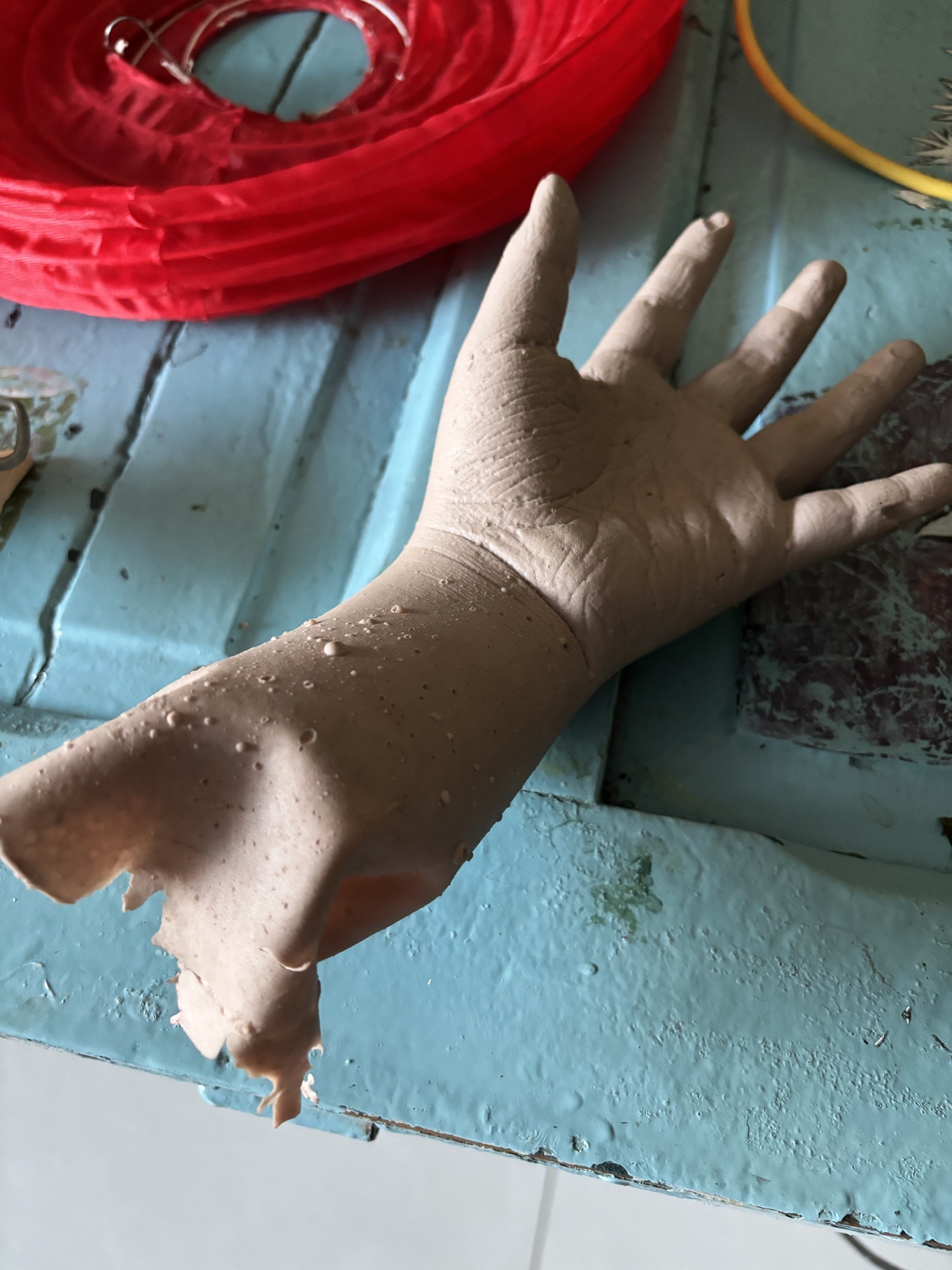
A silicon prop used for filmmaking by an independent filmmaker in Ho Chi Minh city, 2024. Photo by Việt Vũ.
My overall research employs an auto-ethnography method and a qualitative approach that combines interviews, textual analysis, and contextual examination of film-related materials. Between 2022 and 2024, I conducted 21 interviews with various figures in Vietnam’s independent film sector as part of my broader doctoral research. Participants were selected through purposive sampling based on their direct involvement in, or professional knowledge of, independent filmmaking and censorship. However, a few potential participants declined to be interviewed or opted to remain anonymous. All interviewees provided informed consent, and anonymity was granted where requested. All interviews were conducted in Vietnamese and later transcribed and translated into English by the author.
Within this particular article, the analysis focuses on four Vietnamese independent films produced between 2010 and 2024: Bi, Don’t Be Afraid! (Phan Đăng Di, 2010), The Third Wife (Nguyễn Phương Anh a.k.a. Ash Mayfair, 2018), Taste (Lê Bảo, 2021), and Viet and Nam (Trương Minh Quý, 2024). For the purposes of this article, the analysis of these four case films draws on data from four semi-structured interviews that provide contextual insights relevant to the issues discussed. These include the directors of Bi, Don’t Be Afraid! and Taste, the producer of Taste, and filmmaker Nguyễn Hoàng Điệp, who served as a member of the censorship council involved in reviewing Taste. In addition, I held informal conversations with several anonymous sources connected to both Taste and The Third Wife, who provided further insight into the processes and discourses surrounding film censorship in Vietnam. For Viet and Nam, the analysis primarily relied on textual sources.
Socio-historical background of film censorship in Vietnam
Film censorship began in Vietnam during the French colonial period. The first Cinema Order was issued by the French colonial authorities in Indochina (today Vietnam, Laos, Cambodia) in 1921, named “Order of the Governor-General of Indochina”. Article 1 of this Order states:
No motion picture may be presented to the public – or, if issued in Indochina, exported from the colony – unless the film and its title have obtained a visa from the Governor of Cochinchina or from the Resident Superior of Tonkin [today Hanoi], by permanent delegation of the Governor-General of Indochina.5
The authoritarian French colonial administration also published a propagandic justification for cinema censorship in Indochina, with the primary aim of suppressing political dissent or potential rebellion that cinema might provoke.6 However, a notable case opposing the screening of La Vallée des nudistes presents a special censorship dynamics. At the Majestic Cinema in Saigon in February 1939, La Vallée des nudistes was pulled on opening night after a Vietnamese Catholic priest phoned the Cochinchina government to demand a ban and promised street protests. The exhibitor noted the film had passed censorship regulations “both in France and here,” yet removed it and posted a sign: “Film withdrawn at the Church’s request.”7 Firstly, this case shows how colonial authorities could still intervene despite a prior visa. Secondly, it reveals underlying Vietnamese moral norms regarding nudity, evidenced by the fact that the complaint originated from a Vietnamese priest rather than a French official, citing the film as “immoral”. More broadly, the case indicates the existing operation of normative (or “constituent”) censorship within Vietnamese society, which the colonial regime subsequently codified into law.
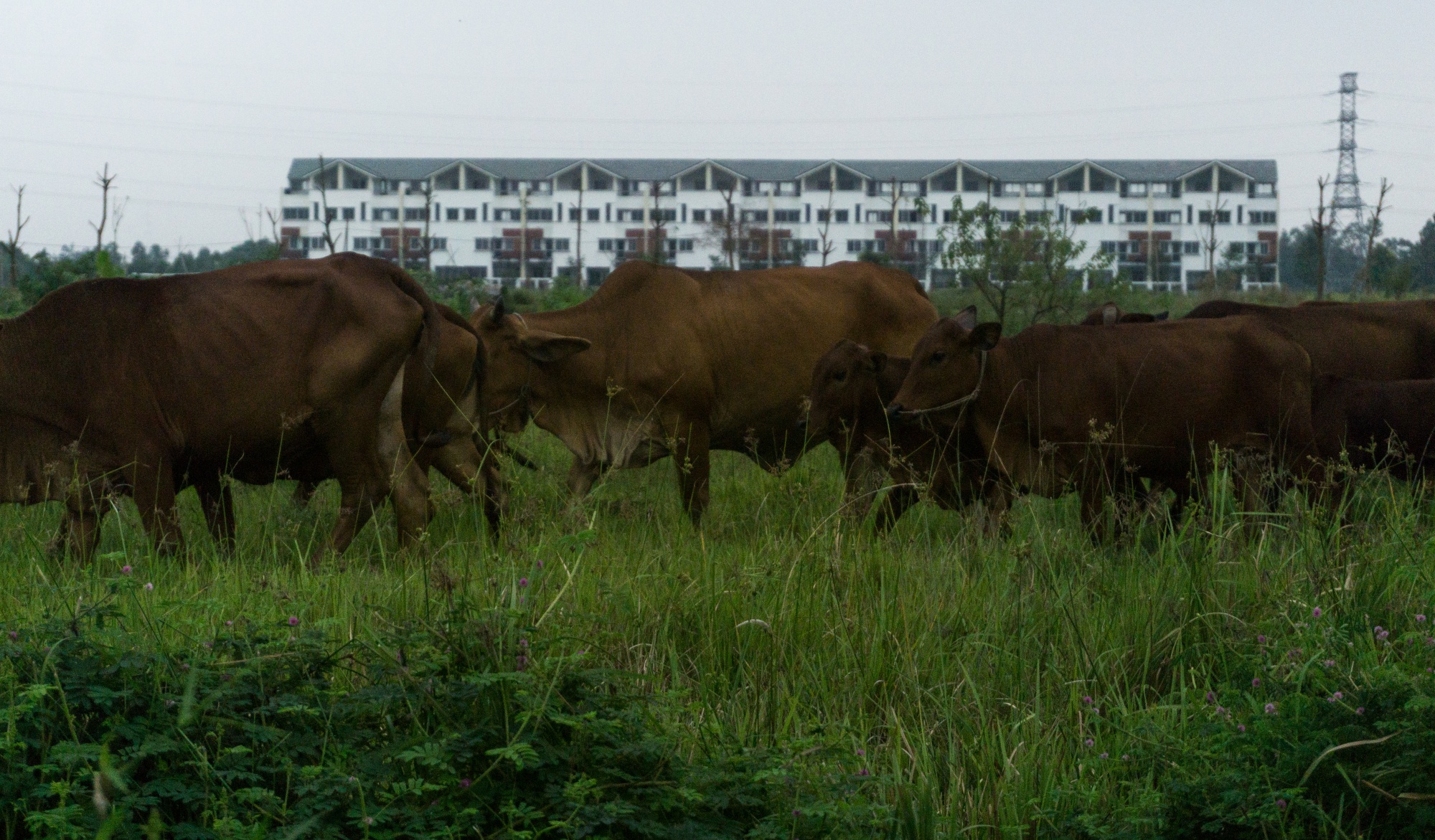
Vietnam is a country in transition from a rural culture to a global and consuming one. The current research takes place in the context of a neo-liberal authoritarian society. Photo by Việt Vũ, 2018.
After 1954, North Vietnam (the Democratic Republic of Vietnam) consolidated its film industry under the Communist Party, transforming it into a state-controlled propaganda apparatus. Decree 147/SL (1953) and the founding of the Vietnam Feature Film Studio (1956)8 institutionalized film production under ministerial oversight, with all filmmakers serving as state employees. Wartime “Revolution Cinema” functioned as an artistic army supporting socialist ideology; any expression deemed “bourgeois” or critical of the war was harshly censored and punished heavily.9 Cinematographer Nguyễn Hữu Tuấn recalled secretly destroying photos showing civilian casualties in Hanoi during the 1972 bombings, fearing punishment by the culture police (officials from the Ministry of Public Security responsible for monitoring and regulating cultural production).10 After reunification in 1975, the Socialist Republic of Vietnam extended strict ideological and moral control over cinema, banning “reactionary” or “obscene” materials and requiring permits for all domestic and imported films.11 Filmmakers’ testimonies consistently describe post-war censorship as “extremely strict” and “harsh”, with persistent instances of prior review, mandated cuts, and even post-release bans.12 Directors such as Đặng Nhật Minh and Trần Văn Thuỷ documented the pervasive surveillance and censorship of the post-war years, describing a system of pre-approval, mandatory cuts, and post-release bans that defined Vietnam’s cinematic landscape through the 1980s.13
In the Socialist Republic of Vietnam, film censorship remained largely unchanged until the early 2000s, when the emergence of a commercial film market, digital production, and an independent cinema ecosystem began to reshape the landscape. The film market was formally structured by the First Cinema Law (2007), which recognized film as a commodity and opened space for private investment. Vietnam’s accession to the World Trade Organization in 2007 further accelerated marketization and global integration. In the present context, although the Party-state’s ideology is socialist, authorities increasingly permit market mechanisms while retaining tight cultural oversight – an arrangement called neoliberal authoritarianism. Due to the abundance of digital film production, local film censorship switched from a pre-inspection to a post-inspection mechanism. For post-inspection, when a film is completed, the producer must submit the final film for approval before it is licensed or shown anywhere, whether inside or outside Vietnam. An age-based classification (P, K, T13, T16, T18) and a prohibited “C” category were introduced in 2015; the 2023 Law on Cinema later tightened these provisions, particularly regarding film prohibitions.14 Vietnam’s move to film classification is more progressive than in China (which has no classification system and simply approves or bans films), yet less so than in the Philippines, where “banned” films may still be exhibited at certain institutions for educational or special artistic purposes.15
Vietnamese film censorship is more driven by morality norms constituted inside the social body than by religious regulations (as in Malaysia, Indonesia, or the Philippines), and by political control. Depictions of violence, sex, nudity, queer people, minors, impoverished slums, or anything that could be labelled as “undermining national moral values” are reprimanded, censored, or banned. Socio-political narratives about independent journalism, activism, democracy, freedom of speech, land repossession, or military and governmental corruption face the most severe punishment. The threat of punishment has led most filmmakers to self-censor and avoid socially sensitive themes. When a case of censorship becomes challenging, the “culture police” may raid the film centre. For instance, Hanoi DOCLAB, a documentary and experimental film centre in Hanoi, was raided in 2019 for showing a documentary about demonstrations in Hong Kong. The police can also supervise filmmakers and film producers in the long term (as in the case of the movie Taste (2021), in which the producers were invited to “work with” the police and regularly received check-up phone calls from the cultural police).16 It is worth noting that, over a century on, Vietnamese film censorship retains two features that echo the authoritarian French colonial era: the suppression of political dissent and the policing of morality.
This research contributes to Southeast Asian cultural studies by demonstrating that engagement with regional counterparts – such as the Philippines – could help Vietnamese policymakers embrace greater openness, fostering cultural and societal development.
In this context, local independent cinema was born. Vietnamese independent filmmakers are those who work exclusively outside the two major local cinema systems: national propaganda (which is subsidized by the government) and the mainstream commercial industry. Nonconforming to the propagandistic ideology of the Vietnamese state singly led by the Communist Party, independent filmmakers produce audio-visual artworks self-sufficiently without the subsidy of the government. At the same time they are independent from the dominating mainstream commercial filmmaking market. For nearly two decades, local independent filmmakers have challenged traditional moral and social values interwoven with a state-constructed national identity. Because they try to “recode” aspects of national identity through filmmaking in the era of globalization, their movies meet with local censorship executed by both government institutions and Vietnamese civil society.
The sexual body as battleground of national identity
Across Vietnamese culture, literature, mainstream media, the social imaginary, and cinema, the normatively heterosexual male body is often cast as a metaphor for national identity. An early example appears in the legend of Saint Gióng: a miraculous boy who, silent until the age of three, hears the king’s call for help and overnight grows into a giant warrior, dons iron armour, rides an iron horse, wields bamboo, defeats foreign invaders, then ascends Sóc Mountain and is deified.17 Gióng’s rapidly expanding body functions as an image of the national body – transformed into extraordinary strength under external threat. The motif persists today, as Gióng is still deployed in Vietnamese mainstream media as a symbol of breakthrough development in the drive toward industrialization.18 This fighting male body as an emblem of national development remains widespread in Vietnamese literature, cinema, and propaganda billboards (panneaux). In Đặng Nhật Minh’s When the Tenth Month Comes (1984), the village deity – the community’s sacred image – is figured as an ancient soldier who died resisting foreign enemies. In the novel Quay of the Spinsters, later adapted for the screen under the same title (2001), the character Vạn is a returning soldier and the only man left in the village, embodying its yang (masculine) vitality. Collectively, these male figures are coded as morally exemplary.
Meanwhile, the female body is also widely mobilized as a symbol of national morality. In Vietnamese poetry, the nation itself is figured as a modest, reclining body – for example in Hoàng Cầm’s lines from “Sông Đuống” (1948): “Sông Đuống trôi đi, một dòng lấp lánh, / Nằm nghiêng nghiêng trong kháng chiến trường kỳ” (“The Đuống River flows, a glinting current, / Lying on its side through the long resistance”). In propagandistic cinema, women are cast as custodians of virtue – such as the deceased soldier’s wife in When the Tenth Month Comes and the multigenerational women in Quay of the Spinsters who suppress their sexual desire and personal happiness to maintain common morality. Filmmaker-scholar Trịnh Thị Minh Hà’s documentary Surname Viet, Given Name Nam (1989) reiterates this ideal through fragmentary close-ups – hands, nape, hair – of the áo dài-clad female body, emphasizing modesty and fully covered elegance. Throughout its history, Vietnam Airlines commercials have featured recurring images of an elegant Vietnamese woman in the áo dài and of lotus flowers as emblematic of the nation’s “hidden charm”.
Through a negotiation between personal expression and state control, Vietnamese independent filmmakers are not only resisting censorship but also reimagining the nation’s cultural identity from within.
Between these two emblematic body images lies a dense web of socially coded norms that enforce heterosexual normativity. This dynamic is underpinned by pronounced patriarchy. Within prevailing traditional norms, men hold decision-making authority and are expected to shoulder “grand history”, defending the nation against foreign enemies and other onerous public tasks, therefore exempt from household duties such as washing dishes or cleaning. Women, being regarded as inferior to men, are relegated to menial tasks and accorded little esteem. Customary rules include prohibiting women from entering the family altar while menstruating; not allowing women/children to sit at the same dining table as men; and excluding men who have only daughters from sharing the banquet table with men who have at least one son.19 Crucially, there is virtually no space for gender diversity. As a result, symbolic representations of sexuality in Vietnam have been overwhelmingly heterosexual – a normativity sedimented over millennia. This pattern remained largely unchanged until the early 2000s, when rapid economic growth expanded the middle class and public awareness of gender and sexuality, and independent cinema began to offer more provocative representations. The four following films all foreground sexual bodies that depart from the traditional ideals outlined above. Unsurprisingly, they have figured among the most controversial censorship cases in contemporary Vietnam.
Bi, Don’t Be Afraid! (2010)
Bi, Don’t Be Afraid! (Phan Đăng Di, 2010) is widely regarded as the first Vietnamese independent film to catalyse a wave of local arthouse cinema. Before its release, Vietnamese filmmaking was largely confined to state-subsidized production or commercial entertainment. Having previously worked as secretary at the Department of Cinema, Phan Đăng Di left his government position to pursue independent filmmaking. Together with director-producer Nguyễn Hoàng Điệp, he was among the first to forgo state propaganda funding, instead seeking co-production with France and Germany and securing festival-backed grants such as the World Cinema Fund (Germany) and the CNC (France). These collaborations enabled the production of auteur-driven films outside the state system and inspired a younger generation of filmmakers to follow suit.
The film centres on a dysfunctional urban family in Hanoi, exposing the fractures of socialist morality and patriarchal order. Rather than reproducing the conventional image of the “good, moral woman”, the film portrays its female characters as sexually desiring and assertive. The wife actively initiates physical intimacy with her husband. When her needs remain unfulfilled, she experiences fleeting sensual pleasure while caring for her ailing father-in-law. Likewise, instead of presenting the Confucian model of the teacher as a moral centre, the film depicts a female teacher driven by desire; in one scene she goes outside and furtively looks at her young student urinating in the rain. These transgressive portrayals of unapologetically sexual bodies – especially those challenging standards imposed on women – explicitly interrogate Vietnamese identity.
The most explicit shot – a full-frontal image of a man urinating, framed through the female teacher’s gaze – was excised by the Department of Cinema, deemed improper and offensive to moral values. Meanwhile, a number of local viewers criticized the film as “dark” and supported its being censored.20 Phan Đăng Di recalled that audiences at the time were upset with his rebellious fictional women, still accustomed to the image of the “good, moral woman” reinforced by the posthumous popularity of Đặng Thùy Trâm’s wartime diary.21 The film also sparked debate for situating sexualized bodies within the urban imaginary of Hanoi, the national capital. For many Vietnamese raised under socialist idealism, Hanoi should represent a peaceful, romantic, and harmonious heart of the nation – an identity amplified by propaganda songs, television, and state media. By contrast, Bi, Don’t Be Afraid! renders multiple corners of Hanoi as a dark, chaotic, and pessimistic urban body that dehumanizes its inhabitants.
Notably, Bi, Don’t Be Afraid! was submitted to the Cannes Film Festival while the domestic licensing process had not yet been fully resolved. This act drew harsh criticism from cultural authorities, who accused the filmmakers of bypassing the national censorship process.22 The incident also set an informal precedent: subsequent Vietnamese independent films would often premiere at international festivals before seeking official screening approval at home – a strategy that both circumvented censorship and heightened state suspicion toward the independent sector.
Despite the controversy, the film won the Best Screenplay Award in the “Critics’ Week” section at the Cannes Film Festival in 2010. Ironically, its domestic censorship disputes and official criticism only heightened public curiosity, drawing larger local audiences to cinemas and prompting many to seek out pirated versions of the uncut film online. The uncut version continued to circulate widely across the international festival circuit.
The Third Wife (2018)
The Third Wife marks the feature debut of Nguyễn Phương Anh (Ash Mayfair). Set in nineteenth-century rural northern Vietnam, it follows Mây, a fourteen-year-old girl who becomes a landowner’s third wife and gradually discovers her own sexuality – figured as an unrequited affection for the second, presumably heterosexual, wife Xuân.
Within this enclosed patriarchal microcosm, the film foregrounds female desire over male possession: the third wife is not merely a reproductive body within a polygynous household but a desiring subject. By making same-sex intimacy visible – most notably through a kiss between Mây and Xuân – the film extends the representational boundaries of female sexuality within the Vietnamese costume-drama genre. In effect, it recentres agency and the gaze around women, positioning a feminist perspective within a patriarchal milieu.
In Vietnam, the film was initially granted an 18+ classification (T18) after minor cuts were made to several intimate scenes, including the kiss.23 Four days after its domestic release in May 2019, however, the film faced renewed scrutiny when state officials and segments of the public voiced concern about the wedding-night sequence involving the underage actress.24 Although the scene had already been trimmed to avoid explicit nudity, Đặng Hòa Nam of the Ministry of Labour, Invalids and Social Affairs (MOLISA) publicly argued that employing a thirteen-year-old in intimate scenes violated child-protection principles.25 Tạ Quang Đông, Vice Minister of Culture, similarly framed the controversy as an ethical issue incompatible with “traditional morals”. In response, the Department of Cinema re-reviewed the approved version and fined the producer and distributor 50 million VND (equivalent to about €1600) for screening a cut that allegedly diverged from the board-approved version, though officials did not specify which alterations triggered the penalty. The filmmaker and producers then voluntarily withdrew the film from theatres to protect the young lead actress from unnecessary public scrutiny and controversy.26
Even after its withdrawal, the film continued to attract widespread coverage in the state press, which reported public mistrust of the regulators’ “gatekeeping” role, noting their silence during the controversy and a blame-shifting penalty that looked reactive rather than principled.27
Analytically, the controversy surrounding The Third Wife can be read as involving two distinct but overlapping issues. On one hand, concerns about child protection – especially the ethical implications of employing a thirteen-year-old actress in scenes involving intimacy – constitute a sincere and justifiable objection within both Vietnamese and international regulatory norms. On the other hand, the backlash unfolded in a context where the film’s visibility of female desire and same-sex intimacy was already testing existing moral boundaries. Importantly, state regulators did not frame their intervention as an objection to lesbian representation; instead, they mobilized the language of child protection and “traditional morals”. This discursive strategy allowed the authorities to avoid directly confronting the film’s queer subtext while still responding to the public unease that clustered around scenes where female sexuality – heterosexual and queer alike – was most legible. In this sense, the case illustrates how different regulatory rationales can converge: a legitimate child-protection concern can become entangled with broader anxieties about sexuality, enabling censorship to shift from pre-approval to post-release sanction once a moral panic gains traction.
Before its domestic release, The Third Wife had premiered at the Toronto International Film Festival (TIFF) in September 2018. It went on to screen at San Sebastián, Busan, Chicago, Stockholm, and Cairo, among others. After its withdrawal in Vietnam, the film continued to circulate internationally; in the United States, it was distributed theatrically and online by Film Movement and reviewed favourably in The New York Times, Variety, and The Hollywood Reporter. This contrast between domestic sensitivities and global reception reflects differing moral and aesthetic frameworks through which Vietnamese cinema is interpreted. Rather than a simple case of repression, The Third Wife exemplifies how questions of ethics, representation, and cultural value are continually negotiated across distinct institutional and audience contexts.
Taste (2021)
Lê Bảo’s debut feature Taste (2021) follows a 30-year-old Nigerian man adrift in the slums of Ho Chi Minh City, unemployed and living with four disillusioned, middle-aged Vietnamese women. For much of the film, the characters appear naked – eating, cooking, sleeping, and engaging in sexual activity within the confines of a stark concrete house – forming a minimalist, dystopian tableau of alienation, poverty, and intimacy in contemporary Vietnam.
The film disrupts multiple aesthetic and moral expectations within Vietnamese cinema. Firstly, its persistent portrayal of the naked body rejects both the idealized, heroic imagery of the socialist realist tradition – where the human figure was represented as a desexualized, collective symbol of national virtue – and the sanitized, consumer-oriented bodies of post-Đổi Mới popular culture, shaped by Vietnam’s market reforms and media liberalization after the late 1980s. The aged bodies of the women contrast sharply with Vietnam’s normative vision of beauty, motherhood, and femininity. Secondly, the presence of a Black male protagonist destabilizes ethnonational and racial boundaries, positioning Vietnam within a hybrid, postcolonial space. Regarding its hybridity, the film unsettles the very idea of what “Vietnam” is – revealing it as a process of nation building rather than a fixed entity – one that, from 968 to 1757, gradually expanded southward along the coast down to the Mekong Delta through successive annexations.28 More importantly, the film incorporates the image of the house – a clearly defined structure that stands as an institutional body – into which the narrative deliberately places its characters. The human body, in this sense, becomes a form of resistance against the institutional body of a society that has impoverished it.
In 2021, Taste was banned from domestic release after screening at the Berlin International Film Festival (Berlinale) without prior approval from the Central Feature Film Appraisal and Classification Council. The production company was fined 35 million VND (equivalent to about €1250) for “unauthorized international screening”.29 The cultural police subsequently monitored the local crew and producers, discouraging further submissions of the film to other festivals. Facing bureaucratic impasse, the filmmakers eventually registered the film under Singaporean nationality, enabling it to circulate internationally.30
Within Vietnam, Taste provoked intense controversy. Việt Văn, a state-subsidized journalist and member of the Approval Council, criticized the film for showing “the ugly, the naked, the abject”, and argued that a “good film” should offer “positive progress” as a moral example for citizens.31 He maintained that the film’s depiction of nudity was “not suitable for Vietnamese or Asian culture”, and that its representation of Vietnamese women as “disgraceful and pitiful” made it unfit for circulation. On social media, many viewers echoed this sentiment, denouncing the film as “cinema trash” or “porn disguised as art” and claiming that it insulted Vietnamese women.32 Some commenters went further, personally attacking the filmmaker and calling for public shaming.
Amid this backlash, filmmaker Nguyễn Hoàng Điệp, who served on the Appraisal Council at the time, publicly voiced her support for Taste and defended its artistic integrity. Her stance was echoed by members of the independent filmmaking community, who launched the campaign Ai góp ý giơ tay lên (Raise Your Hand If You Have Suggestions) to advocate for greater creative freedom and fairer treatment of independent films in the forthcoming revision of the Cinema Law. Nevertheless, following the controversy, Nguyễn Hoàng Điệp was dismissed from her council position,33 and the second version of the Law retained most of the previous restrictions on independent cinema. The fact that the censors banned the film reveals a pattern of Vietnam’s censorship policy. As mentioned earlier, although Vietnam’s censorship system has a rating system, it still imposes outright bans, heavily shaped by the legacy of Communist history shared with China.
Despite its ban, Taste premiered at Berlinale 2021, where it won the Special Jury Prize in the “Encounters” section, and continued to screen at international festivals in Rotterdam, Singapore, and Hong Kong. The film was later acquired for online distribution by MUBI, bringing it to global audiences. International critics praised Taste as a striking slow-cinema work of art.34 Rather than a simple clash between repression and freedom, the case of Taste demonstrates how questions of body, nationhood, and artistic legitimacy are entangled within transnational circuits of power, taste, and morality.
The case of Taste also demonstrates how censorship produces its own aesthetic vocabulary. The film’s near-total absence of dialogue, static long takes, and sculptural compositions of the naked body reconfigure visibility itself. Rather than concealing nudity, Taste renders it strangely abstract – transforming corporeality into a sculptural and political presence that exceeds censorship’s moral categories. The result is a visual minimalism born not of freedom, but of negotiation with the limits of representation.
Việt and Nam (2024)
Viet and Nam, directed by Trương Minh Quý, follows two gay coal miners in northern Vietnam whose names – Viet and Nam – mirror the nation’s own. Before Nam pays human smugglers to take him to Britain, the lovers embark on a journey to recover the remains of Nam’s father, a soldier who died in the Vietnam War.
By naming its working-class gay protagonists “Viet” and “Nam,” the film directly challenges conventional notions of national identity. Through its depiction of male nudity and intimacy, it asserts that marginal, queer, and working-class lives are integral to the nation’s fabric. The topless and nude bodies of the two men intertwine with broader histories of migration and war, reimagining the body as a living archive of post-war trauma, displacement, and desire. This reworking of the corporeal and the national contests both heteronormative ideals of masculinity and the heroic, unified vision of Vietnam propagated by state narratives.
The film was banned in Vietnam following its completion in 2024. According to an official letter from the Vietnam Cinema Department, the film’s “content and theme portray a gloomy, deadlocked, and negative view of the nation and its people.”35 After the ban, the Vietnamese co-producer’s name was removed from the credits to allow the film to circulate abroad, though it has never been screened domestically.
On Vietnamese social media, public reactions supported the ban, denouncing the film for its sombre portrayal of the country and its people. Many comments framed the work as “unpatriotic” or “offensive,” objecting to its treatment of the Vietnam War as a “civil conflict” and to the use of “Vietnam” as the title of what they perceived as a dark film about illegal migration. Some viewers also criticized the film’s depiction of gay characters as “tragic” or “socially marginal”.36 These responses reveal the overlap between nationalist sentiment, moral discourse, and heteronormative expectations that shape public understandings of cinematic representation in Vietnam.
During its domestic ban, Viet and Nam was selected for the “Un Certain Regard” section at the 2024 Cannes Film Festival, where it premiered amid growing controversy in Vietnam. After the ban, the film continued to circulate on the international festival circuit, screening at Berlin, Busan, and Rotterdam, where it was praised for its poetic visual style and haunting portrayal of intimacy, loss, and memory.37 The film’s international circulation underscores the transnational strategies often employed by Vietnamese independent filmmakers to navigate censorship. At the same time, the film’s reception reflects the divergent moral and aesthetic frameworks through which contemporary Vietnamese cinema is interpreted: domestically through patriotism and moral propriety, and globally through artistic, humanistic, and auteurist values.
Conclusion
Vietnamese film censorship is not only about cutting “offensive” scenes or protecting morality. The analysis above suggests that the deeper function of censorship is to shape, control, and redefine how Vietnam’s national identity is represented – both to domestic audiences and to the world – in the global age. This function, of course, cannot be separated from its primary role of protecting state power. As directors such as Nguyễn Hoàng Điệp and exiled filmmakers have observed, Vietnamese censorship reaches its absolute limits when filmmakers push those boundaries.38 As researcher Linh Lê aptly describes, “it is like walking through a zoo without knowing when you will encounter an electrified barbed wire fence.”39
While Vietnamese independent filmmakers are often aware that their works will face censorship, their decisions to proceed nonetheless reflect an ethics of artistic testimony rather than simple defiance. The reshaping of national identity they perform may indeed occur primarily outside Vietnam’s borders, within the global film festival circuit, yet these interventions continue to reverberate internally – through debate, moral panic, and the shifting vocabulary of censorship itself. The dynamics between the “inside” and “outside” are therefore not oppositional but dialectical: the very act of being banned at home while celebrated abroad becomes a form of critique that exposes the fragility of official narratives of nationhood.
The findings of this study position Vietnam within the broader Southeast Asian context, where globalization has introduced new possibilities for the fate of cinema and for film policy. This research contributes to Southeast Asian cultural studies by demonstrating that engagement with regional counterparts – such as the Philippines – could help Vietnamese policymakers embrace greater openness, fostering cultural and societal development.
For me as an artist-researcher, this project has unfolded as both an intellectual inquiry and a deeply personal journey. Approaching censorship through an auto-ethnographic lens has positioned me not as an external observer but as someone embedded within, and shaped by, the very dynamics I seek to understand. This situated perspective has helped me grasp the system more comprehensively while feeling less vulnerable when confronting it, especially in a context where scholarship on artistic censorship in Vietnam remains sparse. From this position inside the field, I hope that my study can offer both scholars and independent filmmakers, particularly in Asia, clearer insights into how censorship operates in societies where artists must work under complex and often repressive conditions. Such understanding, I believe, can cultivate greater resilience, confidence, and creative courage among present and future filmmakers, myself included.
Residing in Europe, my connection to Vietnam’s independent film community remains an “imaginary community” that sustains my sense of belonging despite physical distance and an ongoing sense of displacement. Examining censorship has therefore not only illuminated the structural forces shaping Vietnamese cinema but also enabled me to reconceptualize my own identity as a filmmaker navigating multiple cultural and political spaces. Rather than seeking a fixed notion of Vietnamese-ness, I have come to see identity as continually shaped through discourse, community, and lived experience. Acknowledging this evolving positionality, I recognise myself as both a member of the community I study and a filmmaker working across transnational – and often displaced – conditions, an intersection that ultimately grounds and motivates this research. This has allowed me to continue filmmaking with a sharper understanding of how these boundaries operate – and how they can be approached, tested, or reimagined.
Acknowledgements
I would like to thank my collaborators, including filmmakers Phan Đăng Di and Nguyễn Hoàng Điệp, researcher Linh Lê, and Dr Đào Lê Na as well as many other participants, colleagues and friends who either generously shared their knowledge with me or supported me during the field trips in Vietnam. I would like to thank Dr Sofie Verdoodt and Prof. Dr Philippe Meers for their support throughout this project. My thanks extend to ARIA (Antwerp Research Institute for the Arts), VIDI (Visual and Digital Cultures Research Center), SLARG (Sint Lucas Antwerpen Research Group), Fonds Wetenschappelijk Onderzoek (FWO, Grant for a long stay abroad), and the Vietnam Studies Center (VSC) at Fulbright University Vietnam (FUV) for their support.
+++
Việt Vũ (Phạm Quang Trung) (he/him)
is a researcher-filmmaker whose films and audiovisual projects explore under-represented voices across Belgium, Hungary, Portugal, and Vietnam. Việt’s films have screened at major festivals such as Locarno, Rotterdam, and Cork, with several works receiving international awards. Việt attained his Master’s Degree in Documentary Film Directing at Doc Nomads in 2021, which was fully funded by an Erasmus Scholarship. Currently, Việt Vũ is conducting his doctoral research in the arts at Sint Lucas Antwerpen School of Arts and the University of Antwerp, Belgium.
Footnotes
- Brand, Jeffrey E. A Comparative Analysis of Ratings, Classification and Censorship in Selected Countries around the World. Centre for New Media Research and Education, Bond University, 2002. Australian Parliament House, www.aph.gov.au/DocumentStore.ashx?id=a49cb6d1-1cfb-45a8-a410-53a7aff503fc. Accessed 11 Feb. 2026. ↩
- For a selection of key texts on film censorship in the U.S. and Asia, see the box “Selected readings on transnational film censorship (U.S.–Asia focus)”. ↩
- Committee to Protect Journalists. “10 Most Censored Countries.” Committee to Protect Journalists, 10 Sept. 2019, cpj.org/reports/2019/09/10-most-censored-eritrea-north-korea-turkmenistan-journalist/. Accessed 11 Feb. 2026. ↩
- National Assembly of Vietnam. Law on Cinematography (Law No. 05/2022/QH15). 15 June 2022. Effective 1 Jan. 2023. ↩
- “Arrêté du Gouverneur général de l’Indochine sur la censure cinématographique” (Order of the Governor-General of Indochina on Film Censorship). L’Écho Annamite, 15 Nov. 1921, Saigon, Cochinchina. ↩
- Văn Thế, Hội. “Justification de la censure cinématographique en Indochine: La bonne propagande” (Justification of Cinematographic Censorship in Indochina: Propaganda in Good Faith). L’Écho Annamite, 15 Feb. 1921, Saigon. Entreprises coloniales françaises, www.entreprises-coloniales.fr/inde-indochine/Censure_cinema_Indochine.pdf. Accessed 11 Feb. 2026. ↩
- “Censure catholique: Au Majestic-Cinéma à Saïgon, le film ‘La Vallée des Nudistes’ n’a pu être projeté” (Catholic Censorship: At the Majestic Cinema in Saigon, the Film “The Valley of the Nudists” Could Not Be Screened). Chantecler, 9 Feb. 1939, p. 6. Ciné-théâtres de l’Indochine, entreprises-coloniales.fr/inde-indochine/Cine-theatres_Indochine.pdf. Accessed 11 Feb. 2026. ↩
- Democratic Republic of Vietnam. Sắc lệnh số 147/SL về việc đặt Phòng Điện nhiếp ảnh Nha Tuyên truyền và Văn nghệ thành Doanh nghiệp quốc gia Chiếu bóng và Chụp ảnh Việt Nam (Decree No. 147/SL on Placing the Cinema and Photography Section of the Propaganda and Arts Department under the National State Film and Photography Enterprise). 15 Mar. 1953. Cơ quan Chủ tịch nước (Office of the President). ↩
- Interviews with cinematographer Nguyễn Hữu Tuấn and the late director Nguyễn Hữu Phần. Conducted by the author, 2023. ↩
- Interview with cinematographer Nguyễn Hữu Tuấn. Conducted by the author, 2023. ↩
- Democratic Republic of Vietnam. Thông tư số 15/TT-VH của Bộ Thông tin ... cấm lưu hành sách báo, văn hóa phẩm có nội dung chính trị phản động và dâm ô đồi trụy (Circular No. 15/TT-VH of the Ministry of Information Prohibiting the Circulation of Politically Reactionary and Obscene Cultural Materials). 8 Mar. 1976. ↩
- Interviews with various filmmakers. Conducted by the author during fieldwork in Hanoi, Apr.–July 2023. ↩
- Đặng, Nhật Minh. Đặng Nhật Minh – Hồi ký điện ảnh (Đặng Nhật Minh – Memoir of a Filmmaker). Nhà xuất bản Văn Nghệ, 2005. Trần, Văn Thủy, and Lê Thị Duyên. Chuyện nghề của Thủy (Thủy’s Career Anecdotes). Nhà xuất bản Hội Nhà văn; Công ty Sách Phương Nam, 2013. ↩
- National Assembly of Vietnam. Law on Cinematography (Law No. 05/2022/QH15). 15 June 2022. Effective 1 Jan. 2023. ↩
- “Philippine Censors Ban Film on Enforced Disappearances: Marcos Administration Should Overturn X Rating on Documentary.” Human Rights Watch, 26 Aug. 2024, www.hrw.org/news/2024/08/26/philippine-censors-ban-film-enforced-disappearances. Accessed 11 Feb. 2026. ↩
- Shared by an anonymous filmmaker. Interview conducted by the author during fieldwork in Hanoi, 2023. ↩
- Đinh, Hồng Hải. “The Symbol of Saint Gióng and the Gióng Festival in the Historical Context of Vietnam.” Asian Education and Development Studies, vol. 9, no. 1, 2019, pp. 37-45. doi.org/10.1108/AEDS-01-2018-0015. Accessed 11 Feb. 2026. ↩
- Thanh, Hà. “Thánh Gióng Việt Nam vươn mình trong kỷ nguyên mới” (“Saint Gióng Vietnam Stretches in the New Era”). Quân đội Nhân dân Online, 2025, www.qdnd.vn/80-nam-cach-mang-thang-tam-va-quoc-khanh-2-9/thanh-giong-viet-nam-vuon-minh-trong-ky-nguyen-moi-843672. Accessed 11 Feb. 2026. ↩
- From the author’s memory work and auto-ethnographic reflections grounded in more than 30 years of lived experience growing up in a suburb of Hanoi, Northern Vietnam. ↩
- Nguyễn, Thanh Sơn. “Bi, đừng sợ…!” (“Bi, Don’t Be Afraid…!”). Thể thao & Văn hóa, 4 Apr. 2011, www.thethaovanhoa.vn/bi-dung-so-20110331155146985.htm. Accessed 11 Feb. 2026. ↩
- Interviews with Phan Đăng Di. Conducted by the author during fieldwork in HCMC in 2024. ↩
- Interviews with director-producer and ex-censor Nguyễn Hoàng Điệp during fieldwork in Hanoi, 2023. ↩
- Quang, Đức. “‘Vợ ba’ với bé gái đóng cảnh nóng – đã không tử tế thì đẹp để làm gì” (“‘The Third Wife’ with a Young Girl Acting in a Hot Scene – If It’s Not Decent, Then What Is Beauty For?”). Dân Việt, 20 May 2019, danviet.vn/vo-ba-voi-be-gai-dong-canh-nong-da-khong-tu-te-thi-dep-de-lam-gi-7777981406-print728281.html. Accessed 11 Feb. 2026. ↩
- Hà, Tùng Long. “Phim ‘Vợ ba’ buộc phải dừng chiếu trên toàn quốc, nhà sản xuất lên tiếng” (“The Film ‘The Third Wife’ Was Forced to Stop Screening Nationwide, Producer Speaks Out”). Dân Trí, 21 May 2019, www.dantri.com.vn/van-hoa/phim-vo-ba-buoc-phai-dung-chieu-tren-toan-quoc-nha-san-xuat-len-tieng-20190520234002341.htm. Accessed 11 Feb. 2026. ↩
- Lê, Hữu Việt. “Cục trưởng Cục Trẻ em: Xem xét yếu tố xâm hại trẻ em trong phim ‘Vợ ba’” (“Head of Department of Children: Consider Potential Child Abuse Elements in the Film The Third Wife”). Tiền Phong, 21 May 2019, tienphong.vn/cuc-truong-cuc-tre-em-xem-xet-yeu-to-xam-hai-tre-em-trong-phim-vo-ba-post1112895.tpo. Accessed 11 Feb. 2026. ↩
- Chi, Linh. “‘Vợ ba’ bị phạt 50 triệu sau ồn ào cảnh nóng của diễn viên 13 tuổi” (“The Film ‘The Third Wife’ Fined 50 Million Dong after Controversy over a Hot Scene Involving a 13-Year-Old Actor”). Lao Động, 24 May 2019, laodong.vn/van-hoa/vo-ba-bi-phat-50-trieu-sau-on-ao-canh-nong-cua-dien-vien-13-tuoi-735392.ldo. Accessed 11 Feb. 2026. ↩
- Minh, Khuê. “Xử phạt phim ‘Vợ ba,’ Cục Điện ảnh rũ bỏ trách nhiệm?” (“Fining the Film The Third Wife, Did the Cinema Department Shirk Responsibility?”). Người Lao Động Online, 30 May 2019, nld.com.vn/van-nghe/xu-phat-phim-vo-ba-cuc-dien-anh-ru-bo-trach-nhiem-20190529205303812.htm. Accessed 11 Feb. 2026. ↩
- Hồ, Hoàng-Anh. “The Origins of Cultural Divergence: Evidence from Vietnam.” Journal of Economic Growth, vol. 27, no. 4, 2022, pp. 381-420. doi.org/10.1007/s10887-021-09194-x. Accessed 11 Feb. 2026. ↩
- Yến, Anh. “Sau đoạt giải tại Liên hoan phim Berlin, phim ‘Vị’ bị phạt hành chính 35 triệu đồng” (“After Winning at the Berlin Film Festival, the Film ‘Taste’ Fined 35 Million VND”). Người Lao Động Online, 17 May 2021, nld.com.vn/van-nghe/sau-doat-giai-tai-lien-hoan-phim-berlin-phim-vi-bi-phat-hanh-chinh-35-trieu-dong-20210517180616725.htm. Accessed 11 Feb. 2026. ↩
- Nguyễn, Trinh. “Phim Vị ‘từ bỏ quốc tịch Việt Nam,’ trở thành phim Singapore” (“The Film Taste ‘Renounced Vietnamese Nationality,’ Becoming a Singapore Film”). Thanh Niên, 27 Sept. 2021, thanhnien.vn/phim-vi-tu-bo-quoc-tich-viet-nam-tro-thanh-phim-singapore-1851115749.htm. Accessed 11 Feb. 2026. ↩
- Văn, Việt. “Từ phim ‘Vị’ nghĩ về góc nhìn cuộc sống của đạo diễn” (“From the Film Taste, Thinking about the Director’s Life Perspective”). Lao Động, 17 July 2021, laodong.vn/van-hoa-giai-tri/tu-phim-vi-nghi-ve-goc-nhin-cuoc-song-cua-dao-dien-930915.ldo. Accessed 11 Feb. 2026. ↩
- Tifosi, “Rác ‘Điện Ảnh’ Và Một Đám Người Khóc Thuê Thượng Đẳng” (“Cinematic’ Trash and a Bunch of Upper-Class Professional Mourners”), Facebook, 27 Sept. 2021, facebook.com/tifosi.hpo/posts/722029515859711. Accessed 11 Feb. 2026. ↩
- Điểu, Thiên, “Đạo diễn Nguyễn Hoàng Điệp phải rời hội đồng duyệt phim vì ‘vi phạm quy chế’.” Tuổi Trẻ Online, 1 Nov. 2021, tuoitre.vn/dao-dien-nguyen-hoang-diep-phai-roi-hoi-dong-duyet-phim-vi-vi-pham-quy-che-20211101120210776.htm. Accessed 11 Feb. 2026. ↩
- Kiang, Jessica R. “Taste (Vị) Review: Lê Bảo’s Striking Vietnamese Debut.” Variety, 9 Mar. 2021, variety.com/2021/film/reviews/taste-review-vi-1234917242/. Accessed 11 Feb. 2026. ↩
- Wong, Silvia. “Cannes Un Certain Regard Drama ‘Viet and Nam’ Banned in Vietnam (Exclusive).” Screen Daily, 14 May 2024, www.screendaily.com/news/cannes-un-certain-regard-drama-viet-and-nam-banned-in-vietnam-exclusive/5193368.article. Accessed 11 Feb. 2026. ↩
-
Lê, Minh Mẫn, “Phim nghệ thuật của Nhật Bản và “phim nghệ thuật” của Việt Nam” (“Japanese Art Cinema and Vietnamese ‘Art Cinema’”), Facebook, (11 May 2024), facebook.com/man.minh.le/posts/25382065171442227. Accessed 11 Feb. 2026. In this post, the Facebooker compares the poster of the Japanese queer-themed film Egoist (2022) and the poster of Viet and Nam, after which they argued about Viet and Nam as follows:
Viet and Nam (two main protagonists) were not only blacked out on the poster; the information sent abroad also raised problems. The crew referred to Vietnam’s war against the United States as a “civil war,” which fails to reflect the Vietnamese perspective. Viet and Nam are meant to represent Vietnam, yet the characters decide to stow away in a shipping container to cross the border illegally – an act that violates international law. Instead of portraying a successful and happy couple to demonstrate the resilience of homosexual people, the film pushes Viet and Nam to the bottom, depicting them having sex in an unclean state. Is that really support for homosexual people?
In the comment section, around 200 other Facebookers joined in heavily criticising the film. ↩ - Bradshaw, Peter. “Viet and Nam Review – Hallucinatory Love Story Feels the Pain of a Nation.” The Guardian, 4 Aug. 2025, www.theguardian.com/film/2025/aug/04/viet-and-nam-review-. Accessed 11 Feb. 2026. ↩
- Interviews with director-producer and ex-censor Nguyễn Hoàng Điệp during fieldwork in Hanoi, 2023. ↩
- Interview with researcher Linh Lê during fieldwork in Ho Chi Minh City, 2024. ↩
More from this edition
The state of collective creativity within the site and upon arrival. Artists’ perspectives on the Liminal Lab project
Marija Griniuk
John’s care
Anaïs Chabeur