Dit artikel verscheen in FORUM+ vol. 33 nr. 1, pp. 20-27
The state of collective creativity within the site and upon arrival. Artists’ perspectives on the Liminal Lab project
Marija Griniuk
This article explores site-specific artistic creation as a dynamic process of immediate connection with place upon arrival. It examines how contemporary artists function as facilitators within a collaborative framework, engaging with human and more-than-human actors. Using arts-based research, the author focuses on the Liminal Lab project in Kirkenes and investigates the rapid integration of artists into unfamiliar environments. This research contributes to discussions on mobility and performative site specificity.
Deze studie onderzoekt locatie-specifieke artistieke creatie als een dynamisch proces van directe verbinding met een plek bij aankomst. Het analyseert hoe hedendaagse kunstenaars functioneren als facilitators binnen een samenwerkingskader, waarbij zij interageren met zowel menselijke als niet-menselijke actoren. Door middel van artistiek onderzoek onderzoekt de auteur de snelle integratie van kunstenaars in onbekende omgevingen, met een focus op het Liminal Lab-project in Kirkenes. Dit onderzoek draagt bij aan discussies over mobiliteit en performatieve locatie-specifiteit.
Into the Liminal Lab
Today, artistic work is more often considered a collaboration than an individual effort.1 Artists are considered the facilitators of situations involving a multiplicity of human and more-than-human actors. The concept of the site-specificity of an artwork, as referred to by the writer Fiona Wilkie, states that the space for a performance is mounted specifically for the context of a “meeting” between a performer and the audience.2 However, in the context of the artist’s mobility, arriving at a new place for artwork creation carries unknowingness.
In a way, collaborative creative work is connected to relational aesthetics, which in the context of artistic production refers to artists’ human relations with each other upon meeting for the first time and working together, and the new place they arrive at.3 This interrelation of people and place underpins relational aesthetics. However, in its extreme form, it is also related to the speed of one’s connectedness to a place as one arrives and connects with it. This can involve making an instantaneous reading of a place and making sense of it. Artists can arrive at the site of a performance and, despite having had no previous collaboration, can dive into the process of collective creativity. This article unfolds the project Liminal Lab, where artists developed a new performance during nearly one week of collaborative process.
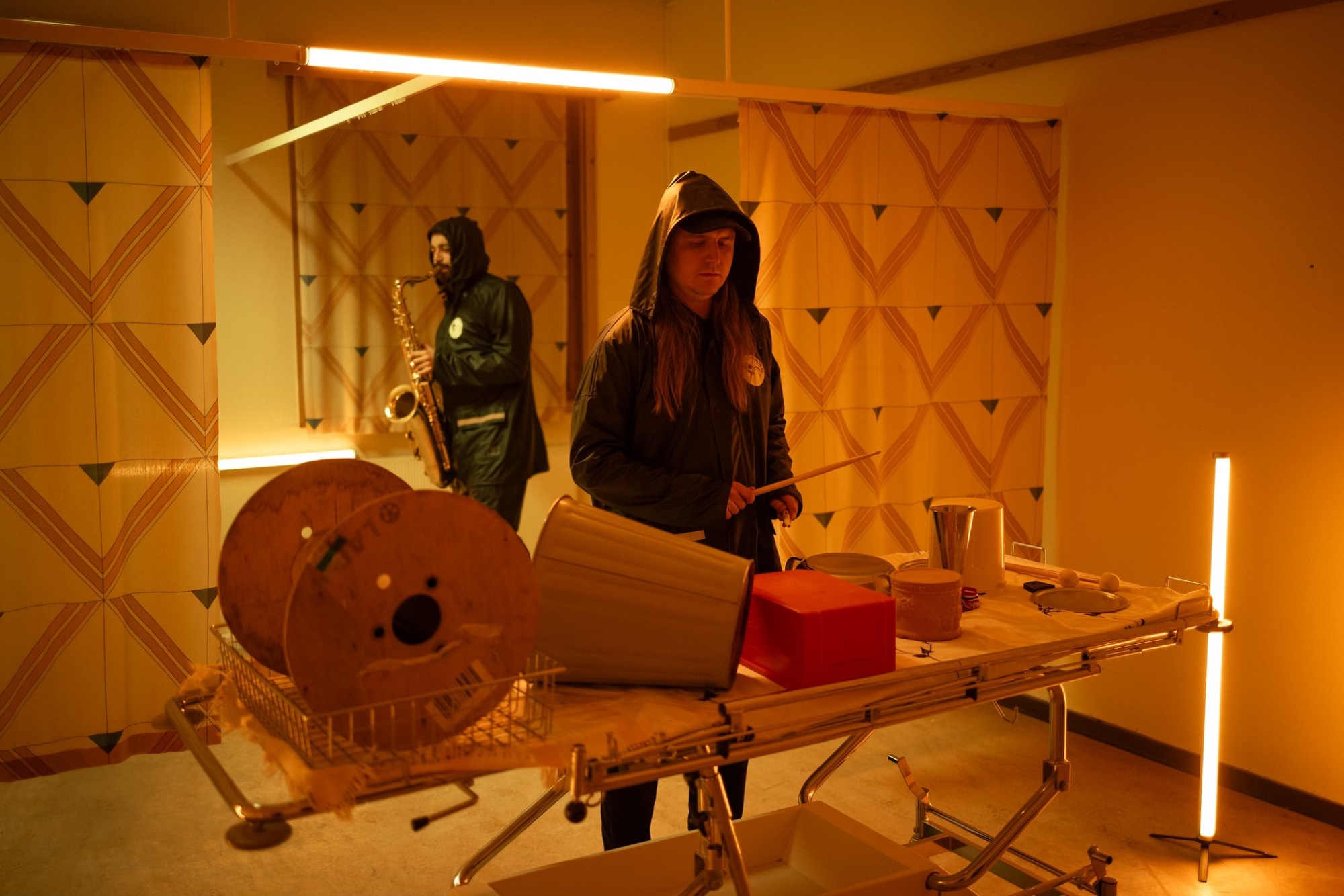
Fig. 1: Performance sequence by Viktor Toikkanen and Mykola Lebed in the Liminal Opera, 2025. Photo by Zhanna Guzenko.
Research question and methods
The research question was: how do the participating artists arrive and connect to place and people within site-specific performances with a short production time? The aim of this study was to investigate the case of the Liminal Lab project to explore how participating artists connect with the place and with each other, and how they create together. As an artist, researcher, and contributor to the Liminal Lab performance I documented, through text, images, and video recordings, the moments of arrival at the venue. These records constitute data collection during the preparation, development, and realization of the performance. My photo and video documentation of performance rehearsals and installation setup was added to the photo documentation generated by photographers Rob South and Zhanna Guzenko.
In exploring artists’ perspectives as participants in the Liminal Lab, the study used an arts-based research approach4 through the creation of a collaborative performance in a new, unknown environment into which the artist arrives, marking the beginning of the creation of a state of arrival. Arts-based research allows for the visual artistic data and personal notes of the artist to serve as qualitative data for reflective analysis,5 which is based on the artist’s previous experience and creates the background for building new encounters and acting within them. This is why the artist as a human is inseparable from the artist as a creator of artistic production.
Sequences of the Liminal Lab project
The Liminal Lab project was organized by the Pikkene på Broen gallery in Kirkenes, a Norwegian city about ten kilometres from the Russian border, together with the artists Kristin Norderval and Oleg Khadartsev. The Liminal Lab originated as a framework for the development of a performance entitled the Liminal Opera for the Barentsspektakel Festival 2025, in this politically charged border region. The project brought together performers who had all been previously involved in performance as (political) activism, using their voices as actors. It was a collaboration between 1999Q (the professional name of Oleg Khadartsev), Kristin Norderval, Viktor Toikkanen, Jenni Kinnunen, Mykola Lebed, Mona Hedayati, Heliä Mailiis Viirakivi, Rumiko Otsuka, Marija Griniuk (the author of this essay), and Karen Werner. The Liminal Opera was developed between January and February 2025 through online meetings and on-site work in Kirkenes, followed by a reflection phase from March to May. The performance followed the idea by Khadartsev of presenting the Liminal Opera in an umbrella format with multiple performance sequences, with each artist having authorship of one sequence. The role of the guide, Rumiko Otsuka, whose background is in choreography, was to lead the audience from floor to floor and from setting to setting for each performance, without speaking, but with gestures and movement.
For the performance venue an abandoned hospital in Kirkenes was chosen. In a week spent there during planning, rehearsals, and the performance, it became a strange intersection of the dilapidated – having been neglected for many years – and a place that was almost home-like, where we wore socks and comfortable clothes while preparing for movement sequences. This alien environment, whose first impression was one of filth and disgust, became our temporary home and studio for the duration of one week.
As the performances unfolded, the experience for the audience reflected the hospital’s dark or artificially-lit corridors, and the performances took place in the settings selected by the artists. Arriving in a group through the lightless corridor of the abandoned hospital, audience members heard first the rhythm of a set of drums. This was joined by a saxophone, and the two would jam for a while in a jazz style, a very pleasing sound that one would not want to leave behind. When the door opened, one would see Viktor Toikkanen and Mykola Lebed in raincoats. Viktor used objects found in the hospital and placed on a surgery table as his drum set (Fig. 1). The room was yellow, illuminated with yellow lights. Mykola Lebed then abandoned his instrument, the saxophone, and in the next sequence, he used water pipes as the musical instruments for blowing and the echo-effect of the staircase between the ground and first floors of the hospital. Here, the pipes were the metaphoric voice of the hospital – they were among the objects found within the hospital environment, and the echo enhanced their voices (Fig. 2).
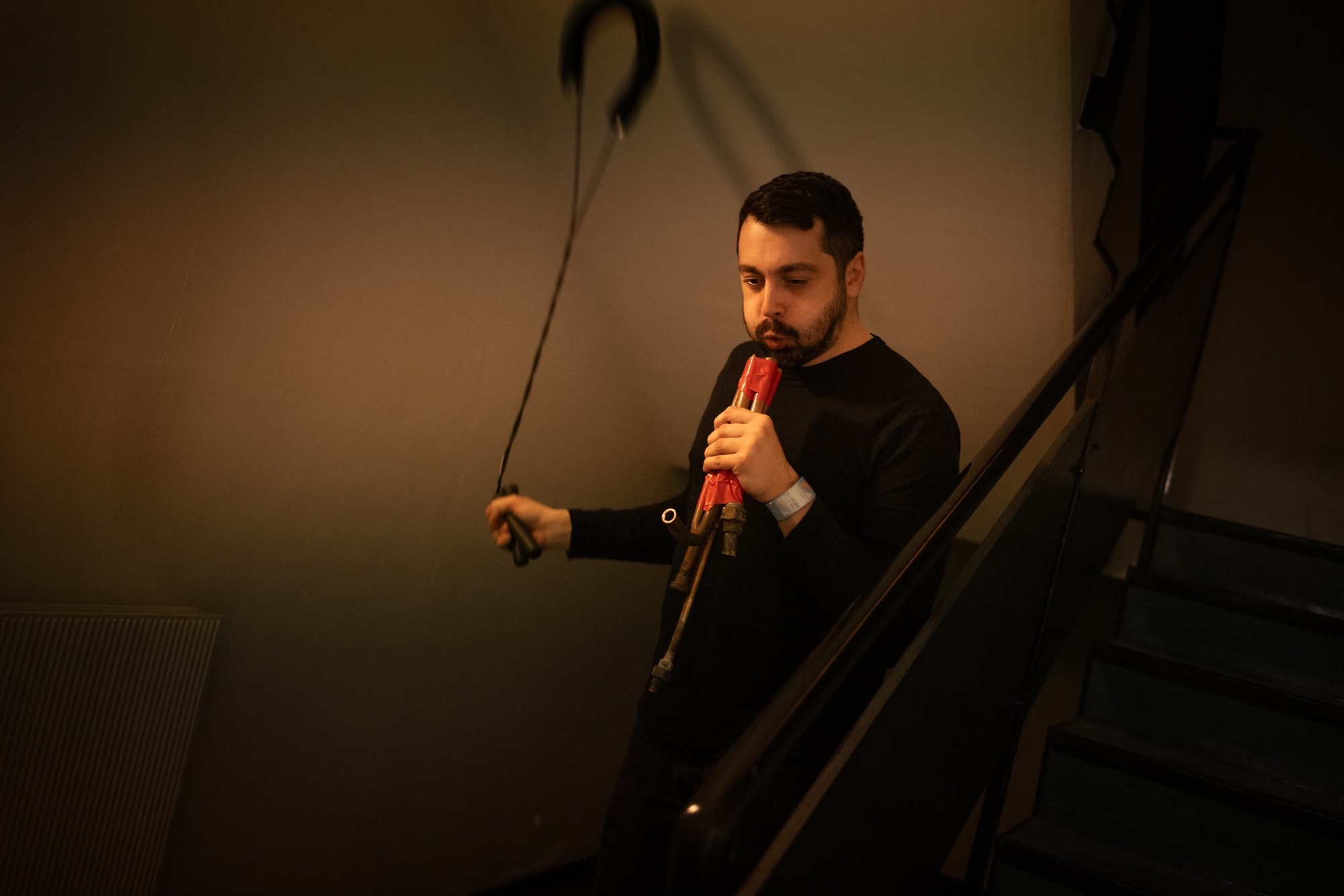
Fig. 2: Performance sequence by Mykola Lebed in the Liminal Opera, 2025. Photo by Zhanna Guzenko.
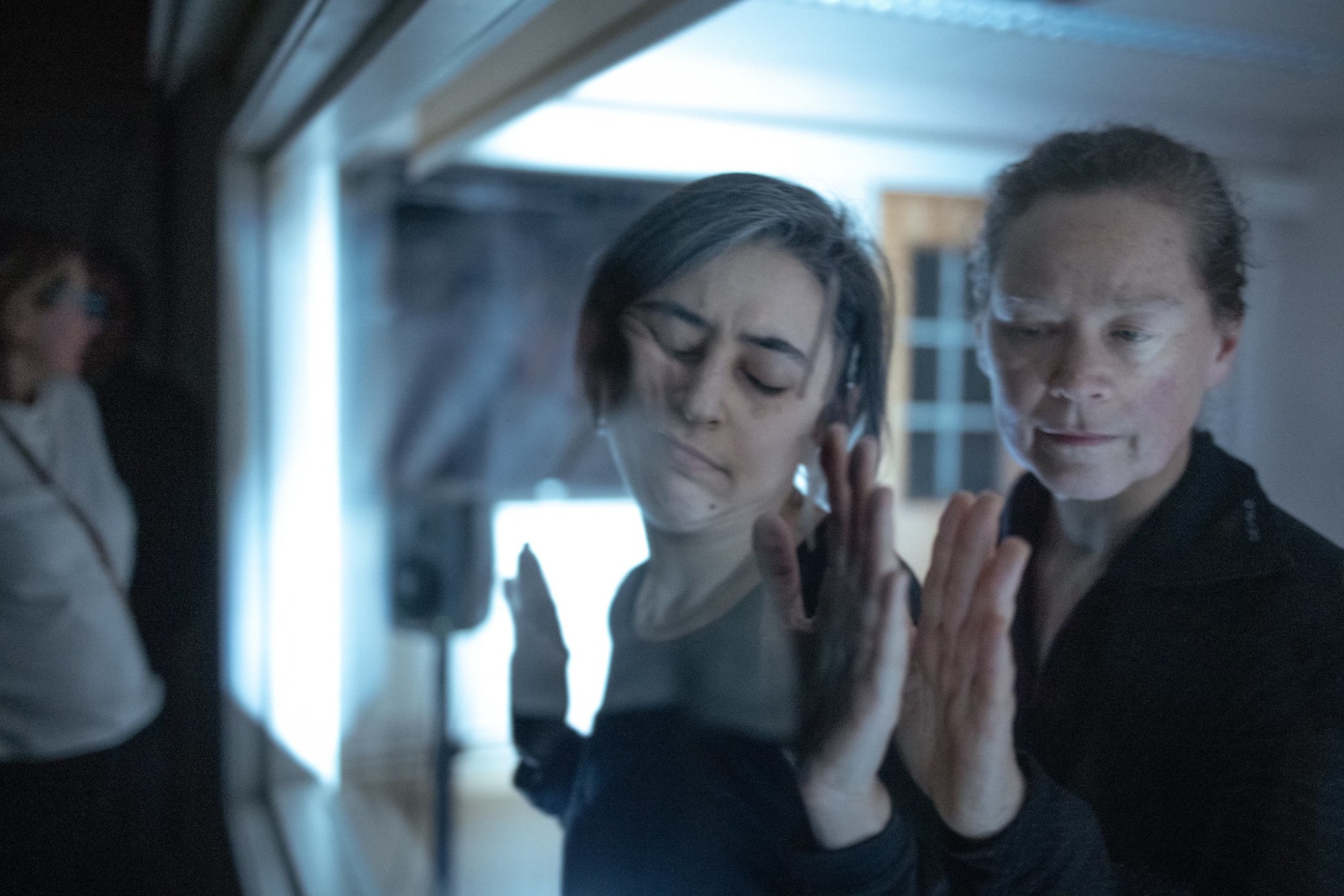
Fig. 3: Performance sequence by Mona Hedayati and Karen Werner in the Liminal Opera, 2025. Photo by Zhanna Guzenko.
The guide then invited the audience into a narrow room that could accommodate approximately thirty persons standing close together, as if in a crowded elevator. Two performers, Mona Hedayati and Karen Werner, were visible through a large window (Fig. 3). This was a surveillance room – the audience could see Mona and Karen, but they could not see the audience. Voices could be heard on one side but not the other – half soundless voices heard only one way, a one-way communication, a one-way voice. There were two such rooms on either side, and at one point in the performance, Mona left one room and went into the other. After the sequence, she left the room and read a text on communication in the corridor. The voice was the audience’s cue to leave and proceed farther down the dark corridor (Figs 4 and 5).
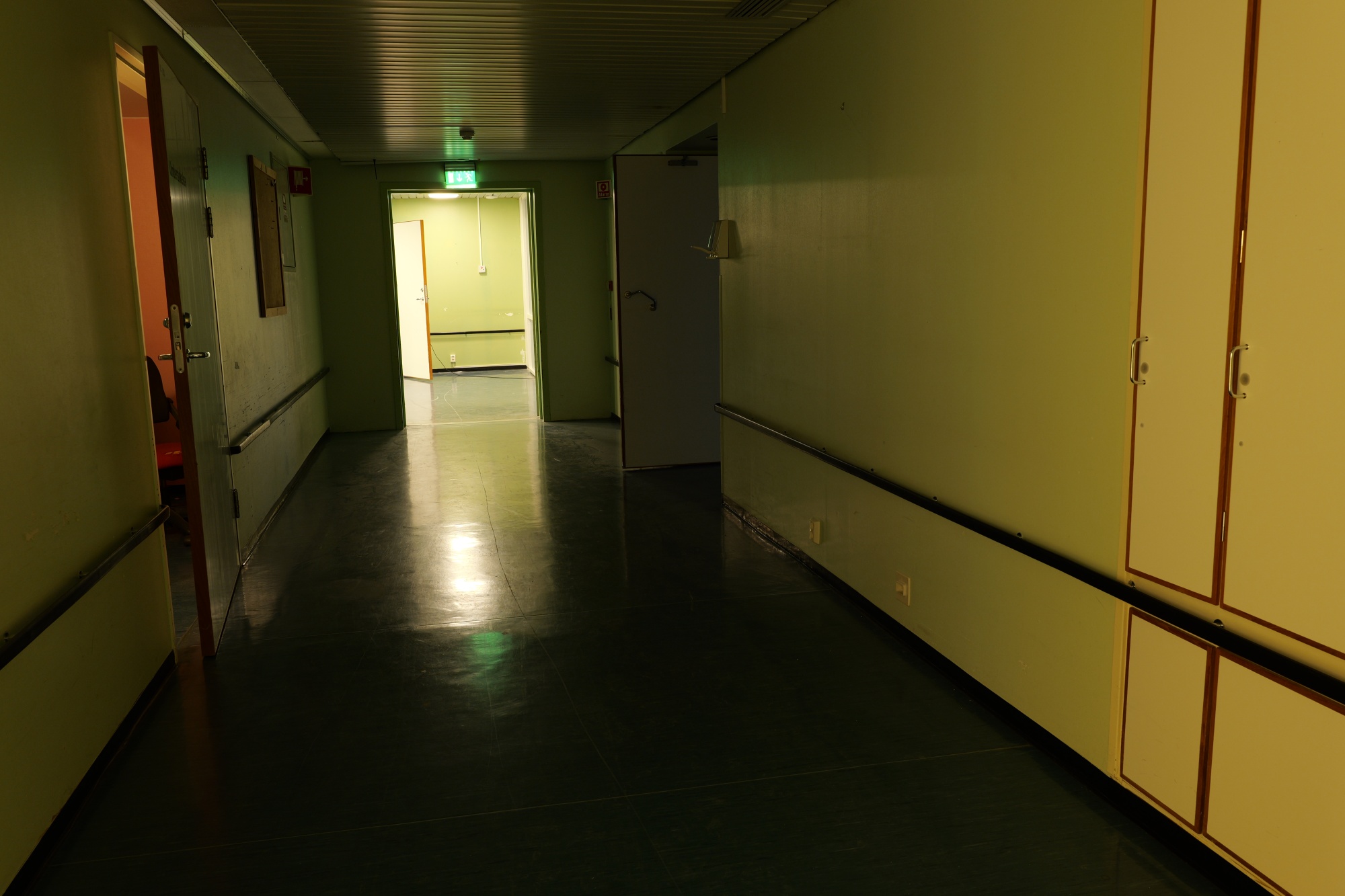
Fig. 4: The corridor between the sequences in the Liminal Opera, 2025. Photo by Marija Griniuk.
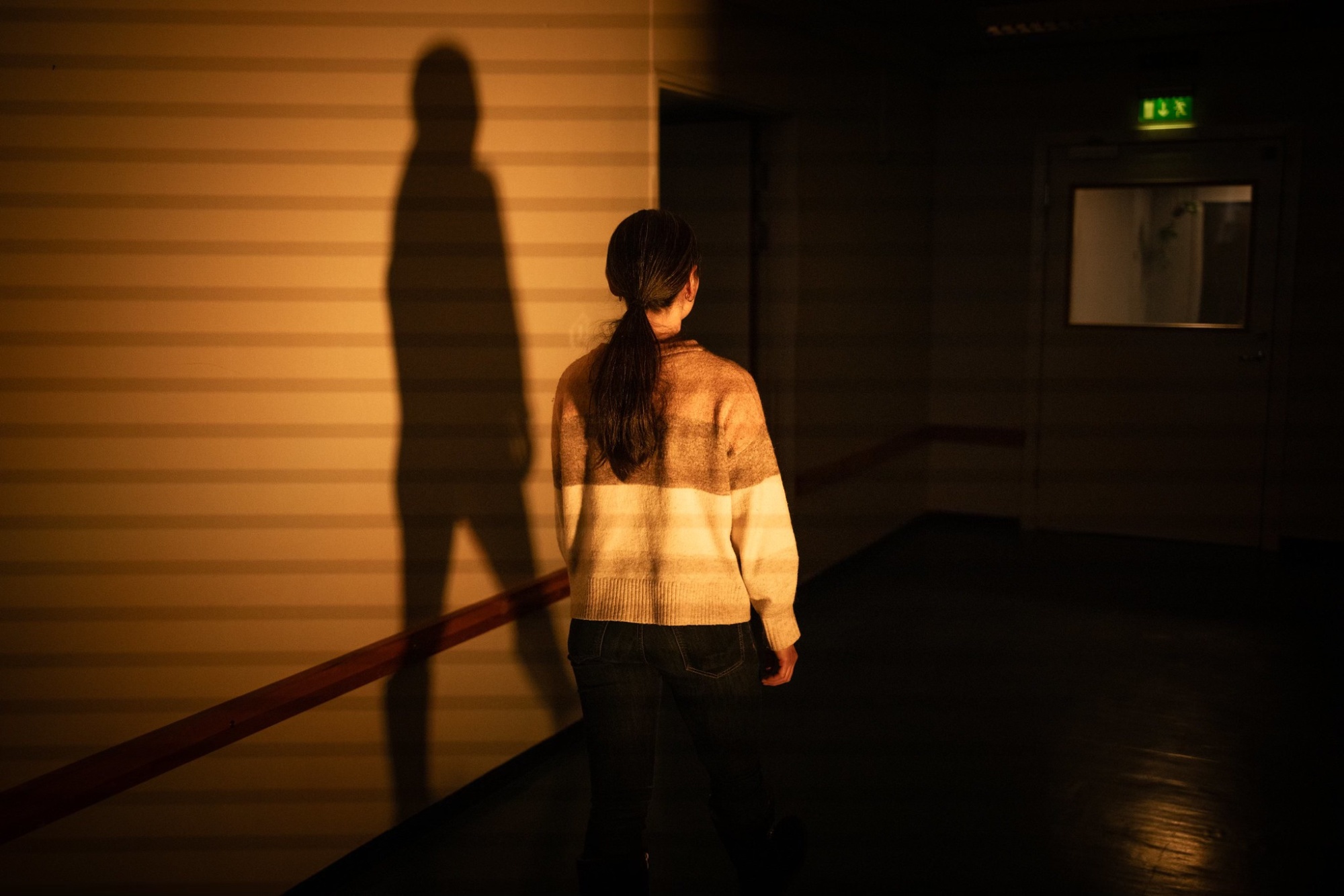
Fig. 5: Rumiko Otsuka guides the audience through the corridor between the sequences in the Liminal Opera, 2025. Photo by Zhanna Guzenko.
My contribution – linguistically unbound and grounded more in sound than traditional voice (if voice, layered with multiple effects, can even be defined that way) – became centred on the visuality of scenography. It emerged from a process of learning the place day by day, and learning to think through and with the sounds that arose from the environment and resonated through the body. It became an act of lingering – an embodied form of archiving. As the sounds were heard and remembered, they were recreated during the rehearsal sessions. The body acted as an absorber of surrounding sounds – an instrument for recreating or mimicking the environment. For example, in one of the group exercises held outdoors, we stood together and listened attentively to the sounds around us. Then, as a choir, we recreated those sounds from memory, echoing the acoustic landscape we had just experienced.
Time, in the context of a week-long residency, suggested a disconnection from everything else – digital flows, daily tasks, and distractions – and called for fully focusing on being present: in the site and in togetherness with each of the co-participants. Such a total state of being in the place, with the place, and with the group is something an artist can rarely afford under contemporary working conditions, lingering in a state of togetherness – with fellow participants – while archiving sounds within the body until the moment one is able to sing. The body can gradually arrive – into the space, into the collaboration, day by day – until it is ready to perform as a public gesture shared with an audience.
Speed-dating with the site of performance
It is important to know where the artist comes from and what kind of works the artist has been involved in; for example, in my case, performance as activism in the Baltic Lithuanian context provides the background for certain reflections and emotional states while working on performance production in Kirkenes, close to the Russian border. Liminal Lab operated across several layers of liminality connected to the site of the performance. The town of Kirkenes – located in Norway yet in very close proximity to Russia – embodies a geopolitical border zone. A second layer of liminality is found in the performance venue itself: a former hospital, a physical building that has lost its original purpose. The performance is situated within these overlapping liminal conditions and takes shape as a collectively created artwork developed by artists who had no prior collaborations with one another.
When arriving at Kirkenes the multilingualism of the community was immediately apparent. Street names in the town are written in both Norwegian and Russian, while official institutional information also includes the Sámi language (Fig. 6). Many members of the Kirkenes community speak Russian, but the majority speak Norwegian, and a few speak Sámi. Oleg Khadartsev described the feeling of Kirkenes today as a Norwegian dead end, formerly the gateway to international communication and trade.
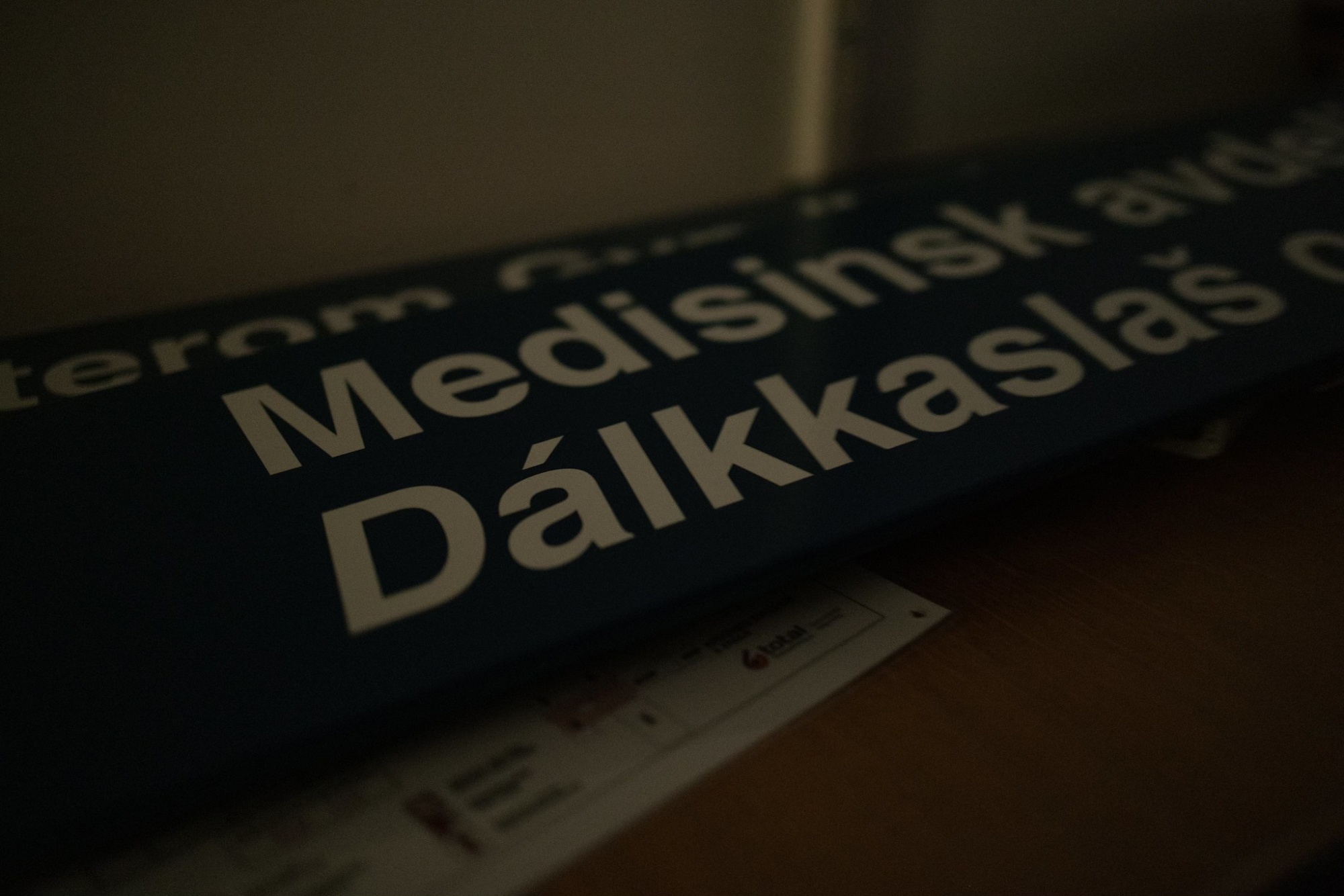
Fig. 6: Sign at the Hospital in Kirkenes, the Venue of the Liminal Opera, 2025. Photo by Zhanna Guzenko.
The hospital as the site of the Liminal Opera
The first day of preparing for the Liminal Opera took place on the site of the future performance, which was three floors of the former hospital in Kirkenes, already inactive for over ten years. Some sections of the hospital had been recently used to host refugees and were reserved for similar purposes. Other parts of the hospital had been gradually abandoned over time, and one can see dates and years in the calendars on the walls signifying when hospital activities had stopped. Many voices of the hospital were raised in the form of writing – signs indicating that an area was occupied or free, titles of different treatment rooms, patient schedules, and floorplans. However, other voices could also be heard: the ventilation pipes and electrical connections. All the medical equipment was still in its original place, inside storage rooms, and in various rooms along the corridors. The archive location stored medical records and floor maps, uncovering the hospital’s history of almost seventy years.
As an artist, ‘arriving’ at a site immediately sets in motion the decision to take the first step and connect with this new place. In joint artistic production, the state of arrival is a collaborative process and is crucial for initiation of the new artwork.
The organizers’ initial idea was that the three floors of the site would be divided thematically. Specifically, the ground floor, with no access to daylight and containing rooms with freezers previously used to store dead bodies, was assigned the theme “Death”. The middle and upper floors were assigned the themes “Time” and “Body”, respectively.
Our first acquaintance with the space was a guided tour by Kristin Norderval, with the aim of a slow walk and deep listening within the space. When walking at a slow pace, almost not moving, in a group, movements are slow but not silent. People in the building bring their sounds – the sounds of steps and shoes gliding on the floor – and the sounds overtake the place. When we stood still, the sounds of ventilation pipes and electricity invaded the space. The ground floor was illuminated by artificial lighting – the floor where lighting was permanent and everlasting – and the time-worn lamps flickered and made crackling sounds. The archives were on this floor, as well as the freezers. For many of us, walking through all of these signals in one place as performing bodies, it was not comforting to walk there, and it felt much worse walking there alone later during preparations for the performance and while gathering floor maps for the scenography.
We moved up the staircase slowly, step by step. The staircase area was freezing, made worse by the sound of the wind outside and the echo of our steps. The sounds on the first and second floors were less intense, but the visual impact was heavier – all the hospital equipment stood where it had been left. However, for me, as a visual artist, it may be that visual input counteracts sounds for me, when visuality is irresistibly dominant in multisensory surroundings.
The site of the hospital was challenging rather than comforting, prompting the questions: what voices can be added to an already crowded scene, and can anything be added at all when the site has such a strong narrative? In my previous work, I had the idea that a hospital can be likened to machinery. Similarly to a wartime situation, it is a form of machinery for healing, but also for death.6 So, in a way, being in this hospital in Kirkenes had some relation to my previous work.
Connection to the venue, my own performance, and the performance as a whole
My involvement began when I submitted an application in December 2024 to contribute to the project, without being quite sure if my practice would fit the call, as it was addressed to performers in music and singing. A note from my research diary states:
Honestly, I was not sure what to expect, and I was not even sure that I fit the requirements, working with the narrative, remediation of my biometric data into sound and live narrative-based performances, when sound effects would interfere with my voice and thus shape a multichannel soundscape. In the first week of 2025, I received the response that I would be one of the eight selected artists, but I was not sure how I felt about this. I do voice performances, but I am not a musician or a vocal performer, as I was working with visual arts. [However], I accepted the invitation, feeling insecure until the very first day of my arrival.
The potential site of performance that attracted my attention was the bathtub, which I thought had a strong symbolic meaning. While it used to be connected to well-being, it was now situated in an abandoned area, specifically the dark corridors of the third floor of the former hospital. The bathtub, as a symbol of healing, also carried the narrative of all the bodies who had been in the tub, and in this way, it also connected to the archives. The physical archives with patient records and other materials were located two floors below the bathtub area (Fig. 7). The bathtub was an archive of the immaterial past presence, similar to the physical archive on the ground floor.
When lying in the bathtub, I was concerned about how the scene looked from the outside, and my only references were video footage and comments from my co-performers. I was never convinced that the audience would not see me. The idea was not to be seen, with only the voice with electronic effects and the feet perceived, but also to illustrate the bathtub, in a way, as the archive of all the bodies that had been in it, rather than being the body with a face. The tip of my hair was lifted above the bathtub to mark the opposite end from the feet of the physical body inside the tub. The sound came from speakers mounted towards the dark corridor, so the sound seemed to belong to the whole area, rather than only to the tub. In any case, lying in the tub, I felt isolated from the space, even in the most direct way – not visible to the audience – but I also had difficulty hearing whether anyone was nearby to know when the audience came and went. For me, any visual clue was detached, and all my coordination of the start and finish of my vocal intervention depended on hearing the footsteps of people arriving and leaving, which was very difficult from inside the bathtub. Simultaneous with preparing for the performance, deep listening to the space took place in my multisensory performance space, which had a very practical purpose – to know when to start and when to end the performance sequence by absorbing the sounds and creating sounds at the same time in the real-time performance.
My experience with voice was from the visual arts area, and when choosing the site or developing the scene for performance, in my case, the visual part seemed to be at the core. I covered the site with old floor plans (to create the connection to the archives, the floorplans of the hospital from the 1950s to the 1980s were brought into the room and arranged as sculptural elements) and chose the performance costume – just two visible striped woollen socks in keeping with the homely, knitted sweater of the guide’s costume. For me, when creating the performance, visuality, scenography, and the location of the body were most important, in a way that put visuality as a dominant voice, while my voice and the electronic sounds were secondary voices of the piece. Only when the visual part of my work was finalized could I work on the vocal part of my contribution.
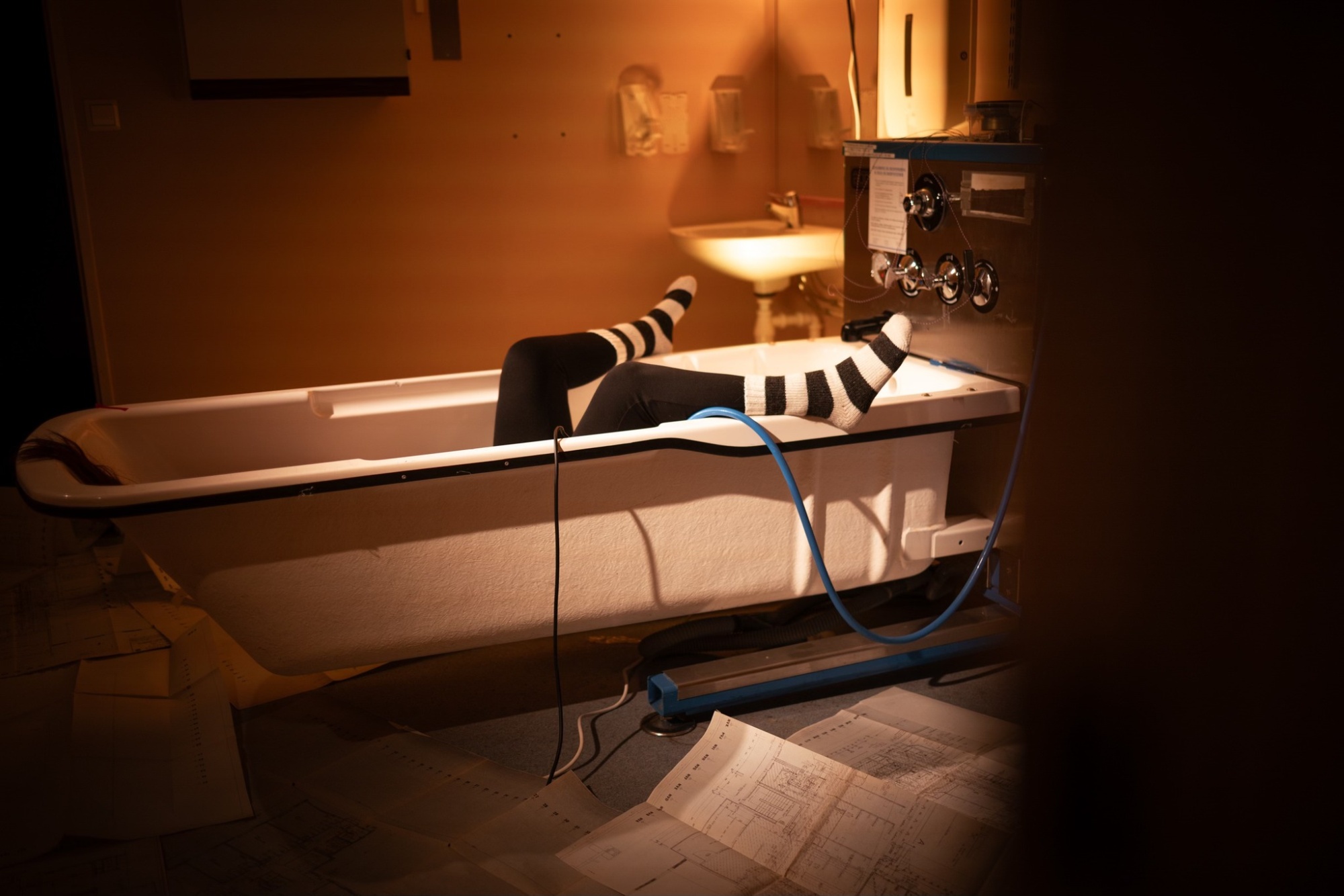
Fig. 7: Performance sequence by Marija Griniuk in the Liminal Opera, 2025. Photo by Zhanna Guzenko.
What about people?
The Liminal Lab project had a limited framework of four days for production and two days for presentation. Connection between the collaborating artists and ability to create together was essential for the new artwork to be developed. To arrive, to connect, and to figure out how to work together was within the Liminal Lab’s first-day process. Each of the contributing artists chose their own performance site. In some cases, two performers appeared together at one site. Becoming One Voice was the final scene of the performance, when all the artists came together in the final scene of the guided walk for the audience, singing simultaneously as eight voices in one space. The content of the singing was songs remembered from childhood in each person’s native language, with the singing and words stretched out. Singing in this way created the ambient sound around the listening audience, with the stretched songs sung in Persian, Ukrainian, Finnish, English, Russian, and Lithuanian.
The location we chose for this final scene was the former office area. A small room was chosen by each artist, and the singing began at one end of the room. Then everyone moved forward to the threshold of the doorway. The large corridor was the space where the entire audience was located. When moving to the threshold, I could see everyone for the first time since the singing scene had begun. The main thing was to feel each other singing and decide how to finish. Someone would be the last to sing, and then – silence. After a few minutes, the guide stood up, signalling that it was time to leave, and the audience followed her in silence. There was no other indication that the performance had ended, so there was no applause. We never heard the audience clapping or commenting at all. After this final scene, they were guided back to the bus. We heard from the guide later that they had clapped as the bus began to move away.
With regard to the childhood songs, from my own early memories, I recognized at least three of the songs chosen by the other artists, along with my own. I wondered how many of the songs the audience, which was multicultural and multilingual, might have recognized. The question will remain unanswered, as no audience feedback was sought in this project, due to our goal of creating a holistic and undisturbed audience experience on site as well as after the performance. The organizers’ opinion was that creating any platform for feedback would impact the individual experiences of the audience members involved.
A question remained: was there enough connection between the artists in this performance, in which some parts were solo pieces set within a larger performance umbrella? It was quite interesting how it became possible to link the artworks within their short terms of production. One might argue that they were intertwined and interconnected, as one sound and image would start where another sound and image would stop. For example, I had an agreement with the next performer in the corridor, Kristin Norderval, that as soon as the deep sounds I made using the metal surface of the bathtub wall ended, this would be a starting point for Kristin to move into her space of performance and start the vocal intervention, even though part of the audience would still be seeing the performance at my site.
Analysing the collaborations: Site, people, or both?
The project involved the multilevel process of becoming situated at the incredible speed of one day until production and four days until premiering the performance. The performance was definitely a collaboration between humans and more-than-humans, with intentionality and mindfulness at the core,7 fostering deep connections with the audience. Here, more-than-humans are the objects in the former hospital, such as the bathtub, or the hospital itself. Mindfulness is the complete focus and connection with the place and the collaborators; it is the undisturbed process within four days of production, where the only time for being alone is sleeping several hours at night. This represents a matrix of interdependencies between humans and more-than-humans as relational material-semiotic worlding, as expressed by Donna Haraway,8 including interdependence between people, their performative actions, the site of the former hospital, and the history of the site. It represents a notion similar to the fact that each of the participants came with their own histories, backgrounds, and languages into this singular performance site. This manifested at the very end of the performance where all the performers sang together.
Could there have been a greater connection between the performers and their sites, with perhaps all artists co-performing in one site? I am not sure if this would have been possible, as all the stories would have been a cacophony (or perhaps a polyphony)? Would the stories have been heard when told simultaneously? In the case of the Liminal Opera performance within the Liminal Lab project, the format of performance sites within the large individual site of the old building, with small-group or individual actions, allowed the building to be the storyteller. Here, the scenes unfolded as the group – with the guide – moved along. The guide was silent, and the movements of the guide were the visual narration of directions and places to go. The artist can no longer be alone and create works behind closed doors; rather, they may need to be alone in dialogues with co-creators to bind individual stories as a single book with several chapters. In this sense, it is important to listen to and hear all the stories to immerse oneself in the entire narration.
This study suggests several findings. Firstly, establishing a deep immediate connection with a new place upon arrival is a quality required of artists in mobile short-term projects, such as Liminal Lab. Secondly, in this process, artists engage with the history, spatial qualities, and present realities of certain places within very short timeframes. Thirdly, artistic work, particularly in performance art, is highly collaborative and involves human and more-than-human elements. Therefore, artists must be able to collaborate with fellow artists and with the site of the performance, such as the bathtub in the former hospital. In this way, a performance becomes an integral artistic work for many stories narrated by the artists along with the performance site, which shall be viewed and heard by the audience.
Conclusion
In short-term residencies within performance art, immersiveness and deep connections with sites, people, and their respective histories must be immediate, mindful, and intensive. The historical, multicultural, and emotionally charged environment of Kirkenes and its abandoned hospital were prominent actors in the current project’s exploratory performance, and the voices belonged to performance artists as well as to more-than-human actors – the hospital building and its surroundings. The project presented slow and deep immersion into the space and its connections with co-performance, with archiving manifested in absorbing the sounds of the hospital and its environment and recreating them directly by, for example, using items from the hospital for sounds, or intuitively by, for example, hearing a nonverbal voice and electronic performance in a bathtub. In this way, mindfulness is linked to intensity, with artistic work involving attentive and active listening to others and a deep investigation of space, both visually and sensually. This idea also highlights the interconnectedness of life and art, as well as the importance of multicultural respect and care among artists as co-creators. Artists arrive at the artwork as humans, bringing their personal backgrounds and narratives, while simultaneously becoming an active part of the creation process within a short production timeframe.
+++
Marija Griniuk (she/her)
is a Lithuanian artist with a background in visual arts, performance art, and performance pedagogy. Griniuk studies new ways of presenting the inner feelings of performing artists to audiences. During 2024-2026 she was a postdoctoral researcher at Vilnius Academy of Arts. From 2025 she is affiliated with Nordlandsmuseet as the department leader for the Southern Department.
Noten
- Kwon, Miwon. One Place After Another: Site-Specific Art and Locational Identity. Cambridge, MA: MIT Press, 2002, p. 102. ↩
- Wilkie, Fiona. “Site-Specific Performance and the Mobility Turn.” Contemporary Theatre Review, vol. 22, no. 2, 2012, pp. 203–12. doi.org/10.1080/10486801.2012.666738. ↩
- Barry, Kaya, et al. “An Agenda for Creative Practice in the New Mobilities Paradigm.” Mobilities, vol. 18, no. 3, 2022, pp. 349–73. doi.org/10.1080/17450101.2022.2136996. ↩
- Leavy, Patricia. Method Meets Art: Arts-Based Research Practice. New York: Guilford Publications, 2015, p. iv. ↩
- Leavy, Patricia. Handbook of Arts-Based Research. New York: Guilford Publications, 2017, p. 3-22. ↩
- I refer to my previous project “The Opposites.” YouTube, uploaded by Marija Griniuk, 18 Jan. 2016, www.youtube.com/watch?v=uXB0UI1CEiU. Accessed 23 Feb. 2026. ↩
- McDonald, Denise. “Investigating Intentionality and Mindfulness of Storytelling as Pedagogy.” Curriculum & Teaching Dialogue, vol. 21, no. 1-2, 2019, p. 97. ↩
- Haraway, Donna J. Staying with the Trouble: Making Kin in the Chthulucene. Durham, NC: Duke University Press, 2016, p. 99-104. ↩
Meer uit dit nummer
Editorial
Falk Hübner
Double or nothing. A duet on mothering and artistic research
Mariske Broeckmeyer, Eva Moulaert