This article was part of FORUM+, pp. 4-5, 22-23
The exchange between artistic research and education. A survey of the eight Flemish Schools of Arts
Assia Bert
This article stems from the project Landscape Sketch: Artistic Research in Flanders, a collaborative initiative between the eight Flemish Schools of Arts. It examines the relationship between artistic research and education within the Schools of Arts on the basis of eight case studies and identifies key tendencies in contemporary artistic research.
Dit artikel komt voort uit het project Landschapstekening: onderzoek in de kunsten in Vlaanderen, een samenwerkingsinitiatief tussen de acht Vlaamse kunsthogescholen. Het onderzoekt de relatie tussen artistiek onderzoek en onderwijs binnen de Schools of Arts aan de hand van acht casussen en identificeert daaruit centrale tendensen in het hedendaagse artistieke onderzoek.
The development of artistic research in Flanders cannot be understood separately from the academicization of higher arts education. The Bologna Declaration of 1999 laid the foundations for the current organization of higher education across Europe, including the introduction of the bachelor’s and master’s degree structure.1 In Flanders, it was decided that the Schools of Arts would offer academically oriented master’s programmes. This entailed a stronger and more explicit emphasis on developing students’ research competencies and fostering a research-oriented approach to artistic practice. These reforms were introduced in the 2004–2005 academic year. As part of the academicization process, the departments of audiovisual and visual arts and of music and performing arts were reorganized into Schools of Arts from 2013 onwards.2 A distinctive feature of the Flemish model is that Schools of Arts form part of a university college and are also jointly governed with representatives from a partner university.3 Within this framework, the Schools of Arts develop their own educational and research policies. As a result of academicization, research has become a core practice within higher arts education. Curricula now include modules dedicated to research competencies, while collaboration with universities enables Schools of Arts not only to offer bachelor’s and master’s programmes but also doctoral programmes in the arts.
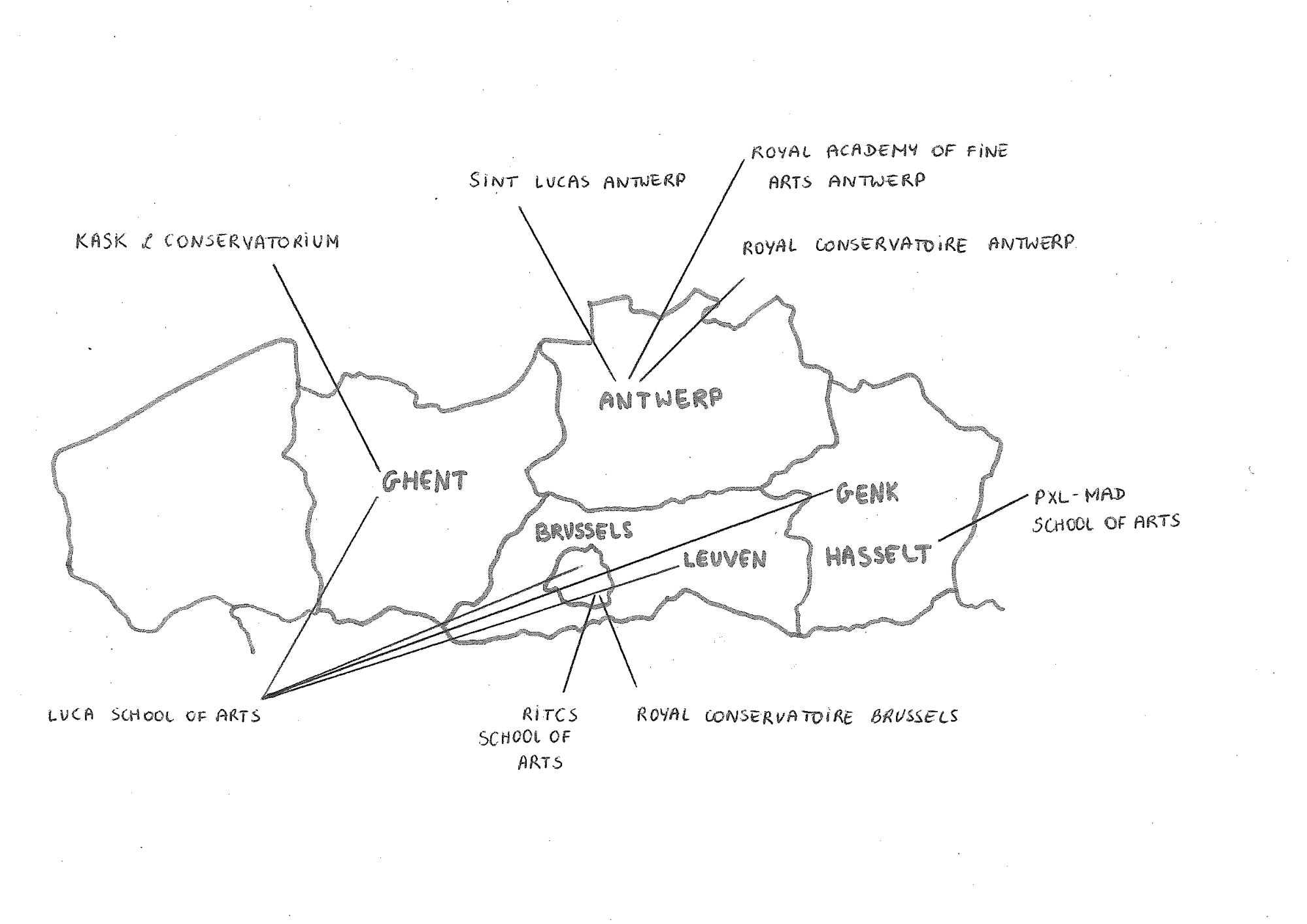
This illustration connects the eight Flemish Schools of Arts to the cities where their campuses are located.
Twenty years have now passed since the restructuring of higher education in Flanders and the introduction of academicization within the Schools of Arts. During this period, artistic research has developed into a fully recognized, though still evolving, field supported by the research departments of the Schools of Arts. Although these departments meet through the Flemish Council of University Colleges and collaborate on a project basis, sustained structural exchange between institutions remains an important point of attention.
The Landscape Sketch: Artistic Research in Flanders project responds to this need. As a collaborative initiative involving all Flemish Schools of Arts, it has brought together reflections on the organization and development of artistic research through a series of discussion lunches. This article builds on that project and focuses on the relationship between research and education as its thematic focus. It considers eight cases drawn from the Flemish Schools of Arts: Sint Lucas Antwerp, the Royal Academy of Fine Arts Antwerp, the Royal Conservatoire Antwerp, RITCS School of Arts, the Royal Conservatoire Brussels, KASK & Conservatorium, PXL-MAD School of Arts, and LUCA School of Arts.
The eight cases not only document a wide range of practices but also reveal three recurring tendencies within contemporary artistic research. The first concerns the relationship between research and artistic practice. The second addresses the positioning of research in relation to broader societal issues. The third reflects a shift from knowledge production as an individual endeavour towards collaborative and relational practices. These three tendencies are discussed below through the eight cases. To avoid repetition, each case is addressed only once, although several speak to more than one of these tendencies.
Mathias Moors, Adri de Vugt, and Thomas De Baets (LUCA School of Arts) introduce the concept of the “reflective practitioner”, characterizing artistic research as a practice in which knowledge emerges from the artist’s own position and experience. Jeroen Billiet (Royal Conservatoire Brussels) similarly approaches artistic research as grounded in practice, describing it as “a way of being in practice.” Anne-Lise Brevers (Royal Conservatoire Antwerp) discusses the pedagogical approach she has developed for the Embodied Theory module in the Master’s programme in Dance, where theory and practice are integrated through embodied learning. Yuki Okumura (Royal Academy of Fine Arts Antwerp) likewise discusses a pedagogical approach, leading to what he calls an “embodied self-portrait”.
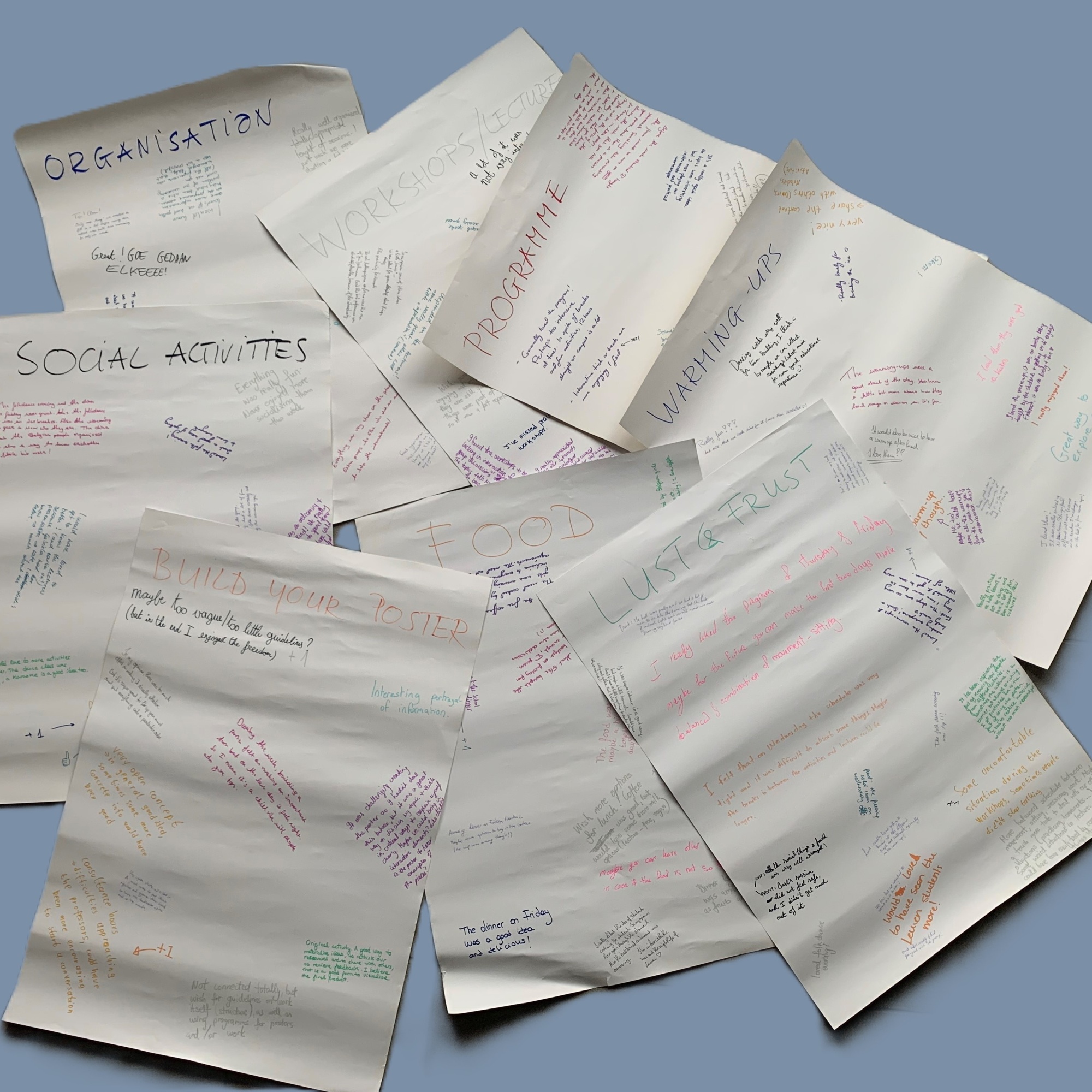
"Nurturing musician-educators’ reflective practice..." by Mathias Moors, Adri de Vugt, and Thomas De Baets
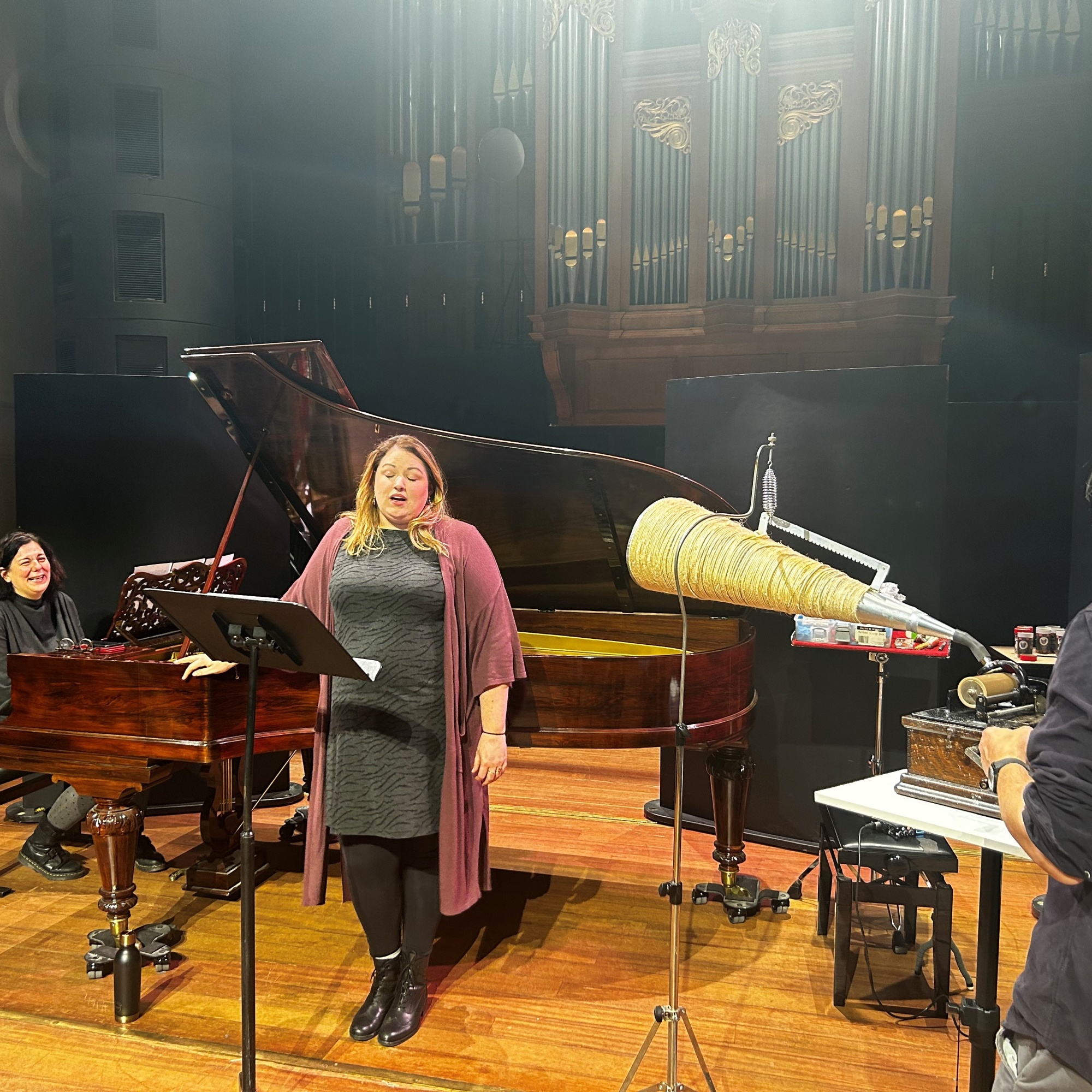
"Thinkering as method" by Jeroen Billiet
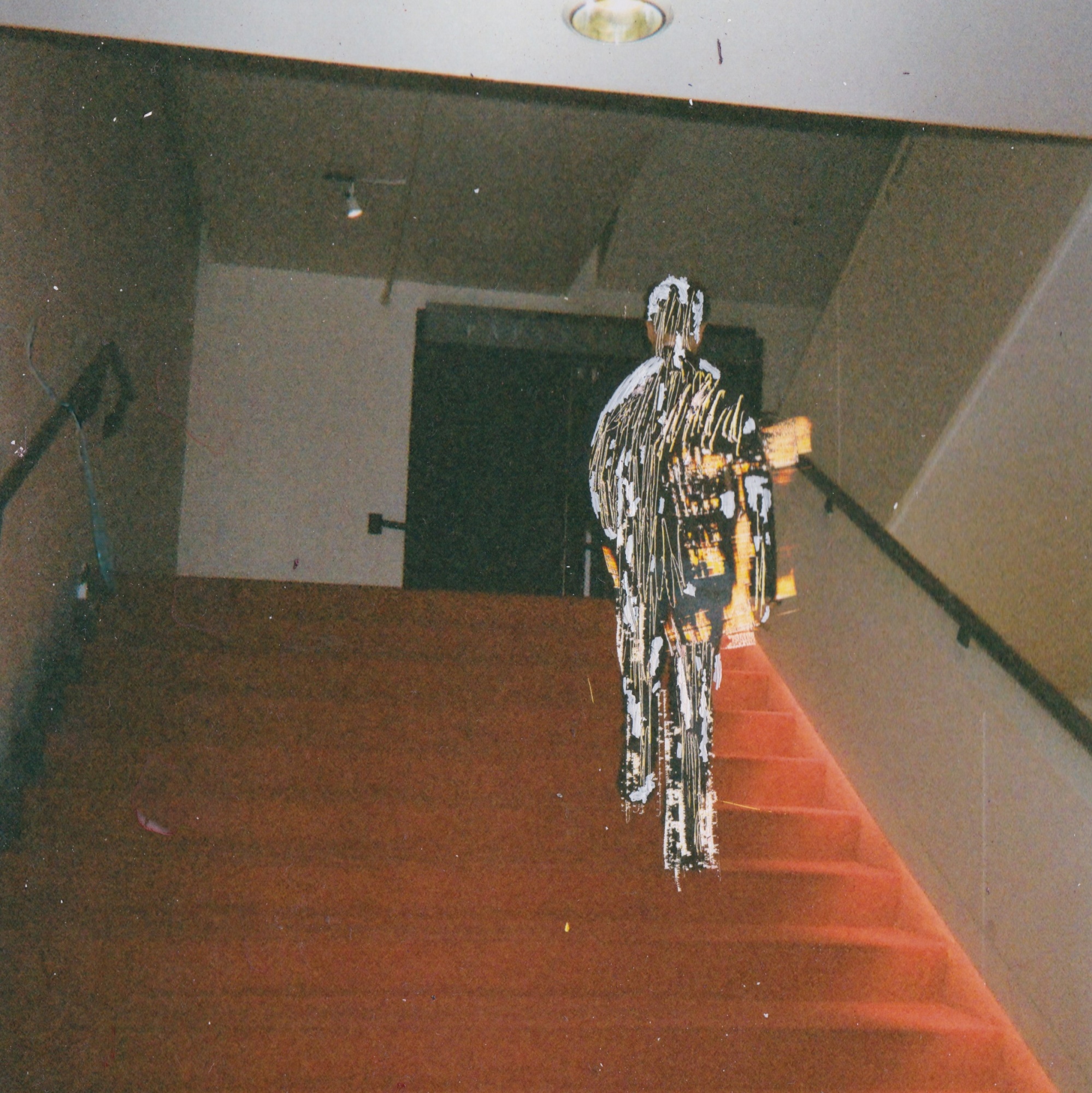
"Embodied Theory" by Anne-Lise Brevers
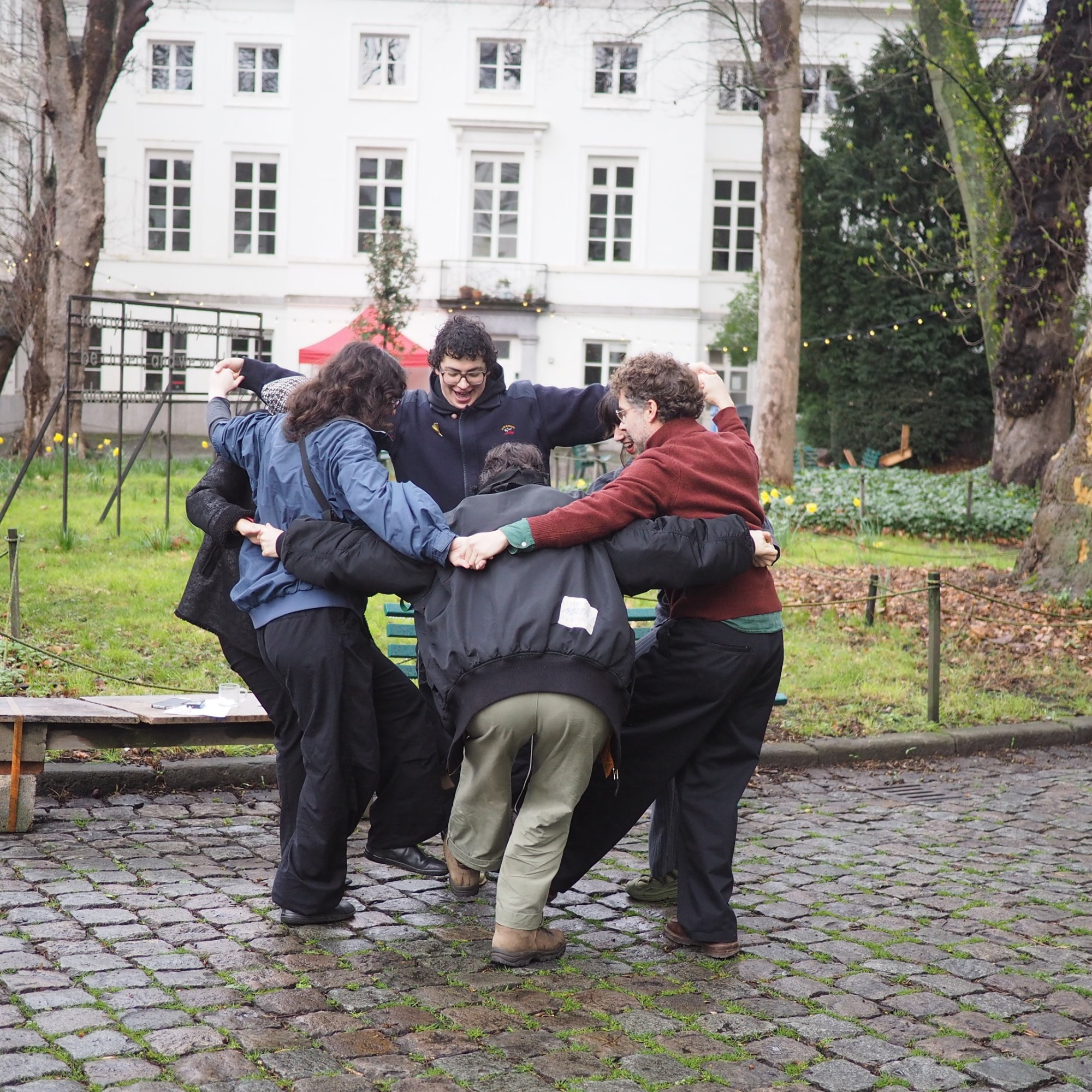
"Conceptual, performative, personal: A curriculum" by Yuki Okumura
Several cases address the relationship between artistic research and wider societal concerns, including decolonization, technology and ecology. Rosine Mbakam (KASK & Conservatorium) examines structures of power and explores processes of deconstruction, both in her own practice and in her work with students. She also reflects on her position as the only Black film lecturer at the School of Arts. Ellen Gillard and Jori Galama (RITCS School of Arts) present the annual Winter School as a space for learning and experimentation, where exchange between students and researchers is central and where “discomfort” is deliberately embraced as a productive condition for learning. Frederik De Bleser, Cèlia Tort Pujol, Myrthe Bokelmann, and Lieven Menschaert (Sint Lucas Antwerp) address students’ concerns that artificial intelligence may diminish their future role within professional practice. Through their “Craft AI” methodology, they encourage students to move beyond a dependent use of AI tools and towards a position of creative agency.
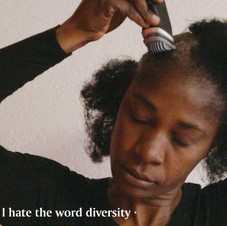
"Disobedience, confrontation, contamination and rebellious cinema" by Rosine Mbakam
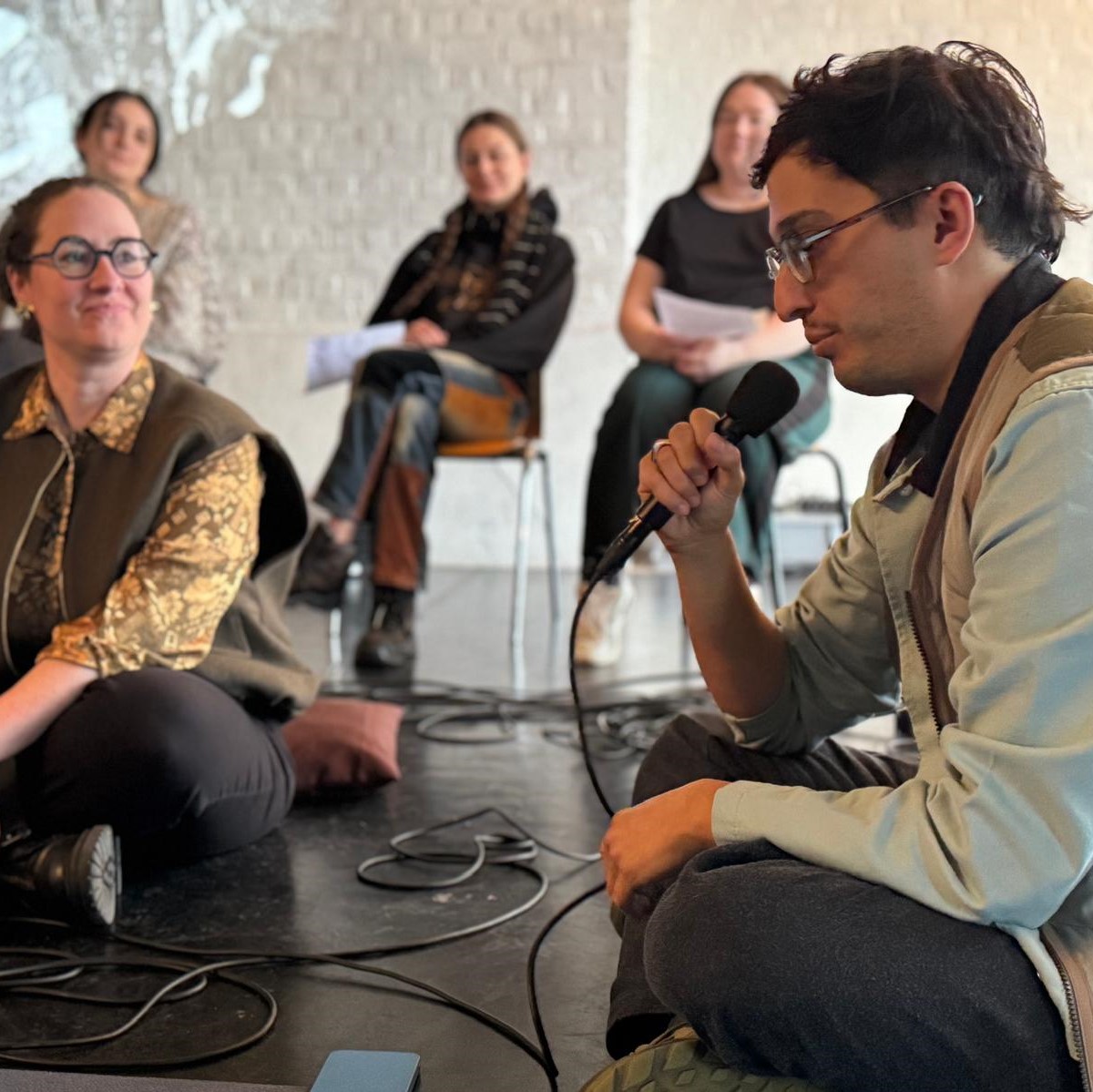
"The Winter School as a research laboratory" by Ellen Gillard and Jori Galama
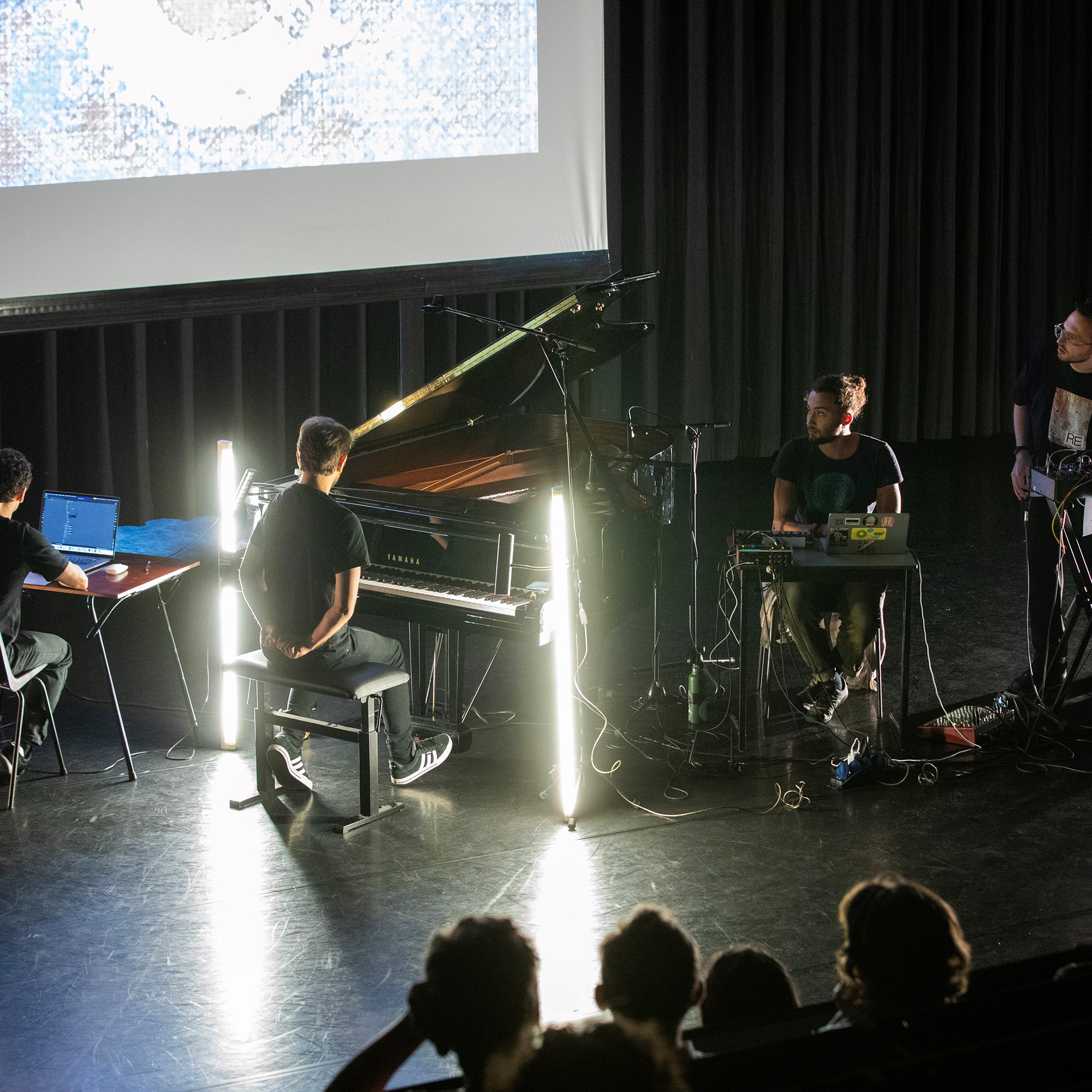
"AI in Motion" by Frederik De Bleser, Cèlia Tort Pujol, Myrthe Bokelmann, and Lieven Menschaert
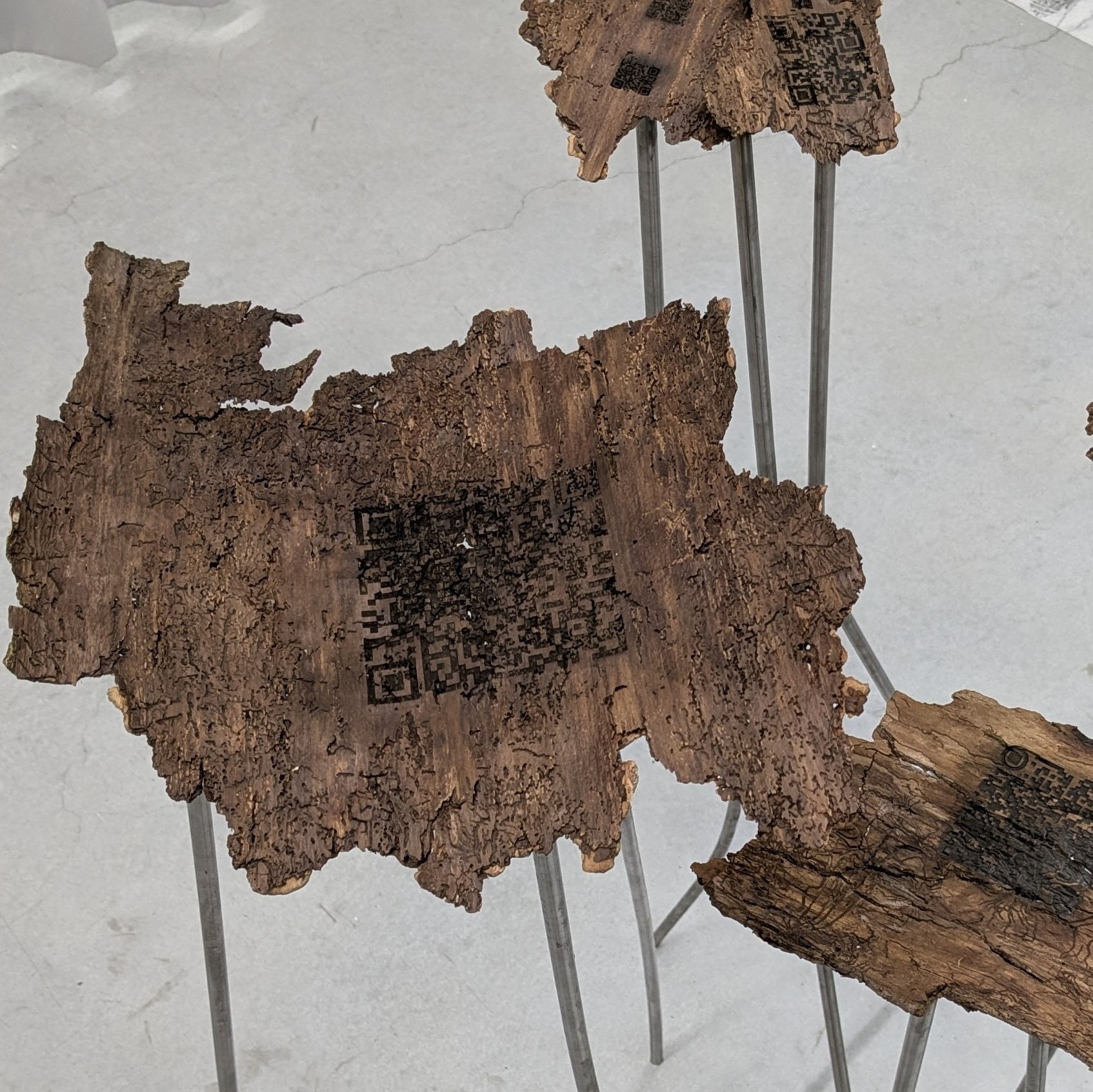
"Co-learning" by Guus Vandeweerd and Anneleen Swillen
Finally, Guus Vandeweerd and Anneleen Swillen (PXL-MAD School of Arts) adopt a posthumanist perspective. Their Master’s seminar functions as a laboratory for “co-learning ecologies.” Rather than positioning knowledge as something transmitted linearly from lecturer-researcher to student, they experiment with horizontal learning structures in which knowledge production and discursive practices become collective, dialogic and multi-voiced.
It is precisely in this shift from transmission to exchange that the contributions demonstrate their greatest strength. Here, the relationship between research and education is not presented as a one-way process but as a dynamic field of mutual influence, extending beyond individual institutions through national and international collaborations, supported in part by the increased mobility fostered by the European Higher Education Area.
Taken together, the cases offer a survey of the many ways in which research and education can inform and strengthen one another. FORUM+ regularly publishes contributions that explore how this relationship takes shape within research projects and educational programmes.4 We hope this article may encourage further investment in the exchange between research and education.
Acknowledgements
The Landscape Sketch: Artistic Research in Flanders project was made possible through financial support from the collaborative fund of the strategic alliance between Erasmus University College Brussels, University College Ghent and AP University of Applied Sciences and Arts Antwerp. The preparation and facilitation of the discussions drew on the Landscape Sketch methodology developed by Flanders Arts Institute (Kunstenpunt).
ChatGPT was used for English translation and editorial assistance. It was not used for analysis, interpretation or source processing. The author takes full responsibility for the final text.
+++
Assia Bert (she/her)
is editorial coordinator at FORUM+ and a member of the research team at the Royal Conservatoire Antwerp, where she contributes to the development and support of artistic research. She initiated the Landscape Sketch: Artistic Research in Flanders project in 2025 to facilitate dialogue and exchange across the Flemish artistic research landscape.
Footnotes
- For more about the 1999 Bologna Declaration see education.ec.europa.eu/education-levels/higher-education/inclusive-and-connected-higher-education/bologna-process. (Accessed 14 Aug. 2025). ↩
- For more detail of the decree of 4 Apr. 2003 see data-onderwijs.vlaanderen.be/edulex/document.aspx?docid=13425; for the decree of 13 July 2012 see data-onderwijs.vlaanderen.be/edulex/document.aspx?docid=14416. (Both accessed 14 Aug. 2025). ↩
- Gorus, Kim. “Onderzoek in de kunsten in Vlaanderen: een stand van zaken.” Veldanalyse Beeldende Kunst, BAM, 2013, pp. 1-4; Voets, Kevin. “Conservatoires in flux. Research in the Arts in the Flemish Conservatoires of the Twenty-First Century.” Artistic Research: Discipline and Resistance, edited by Jonathan Impett, Leuven University Press, 2017, pp. 278-95; Van Schepdael, Anne-Sophie. “De toekomst van artistiek onderzoek: uitdagingen en kansen.” FORUM+, vol. 31, no. 1, 2024, pp. 66-69. ↩
- Some examples from the most recent issues of FORUM+: Vanmaele, Joost and An De Bisschop. “Educatief onderzoek in de kunsten. Een praktijkgebonden en nomadisch perspectief.” FORUM+, vol. 31, no. 1, 2024, pp. 12-23; Timmerman, Kristof. “Ruimte voor transdisciplinariteit. Een plek voor niet-artistieke onderzoekers binnen het ecosysteem van een kunsthogeschool.” FORUM+, vol. 31, no. 2, 2024, pp.12-19; Percivati, Chiara. “Future Schock Orchestra. A laboratory on instrument invention and augmentation.” FORUM+, vol. 32, no. 1, 2025, pp. 32-41. ↩
More from this author
'Thank you for your continuous efforts'
Assia Bert
Language and inclusion: dissonance in polyphony
Assia Bert, Elisa Seghers, Nele Wynants
Editorial
Assia Bert, Elisa Seghers
More from this theme
The hour of the monkey. The role of tension, tradition and repertoire in drama school
Clara van de Broek, Sara De Roo, Jan Joris Lamers
Relational drawing. The Artist as anthropologist
Anke Coumans
Educational research in the arts: a practice-based and nomadic perspective
Joost Vanmaele, An De bisschop
More from this dossier
Embodied Theory
Anne-Lise Brevers
The academy as a mythical landscape
Yorgos Maraziotis